I’m an American.
I have immigrant ancestors from the following geographies:
Netherlands
Germany
Poland
Great Britain
Canada
Lithuania
Transylvania
Volhynia.
My most recent immigrant ancestor was my maternal grandfather, who was born in Transylvania and immigrated to America in 1913 at age 6.
The earliest immigrant ancestors I have confirmed arrived in Massachusetts on the Swallow circa 1630-1635. If Ancestry Family Trees are correct, I have an ancestor, Thomas Clarke, who came aboard the Anna in 1623.
My maternal grandfather's family were almost deported.
My early maternal immigrant ancestors meet the definition of undocumented aliens.
Most of my paternal immigrant ancestors arrived in the US without knowing English.
I’m Jewish
I have ancestors and 3rd cousins (or closer) who are/were of the following faiths:
Jewish
Methodist Episcopalian
Mennonite
Pilgrim/Puritan Separatist
Lutheran
Christian Scientist
Catholic
Sikh
(and possibly Choctaw)
I'm a cisgendered heterosexual, though I've recorded multiple single-sex marriages in my family database. I have a third cousin who was likely murdered due to his sexual preference.
I agree with the famous words of Pastor Martin Niemoller (1892-1984)
In the Jewish tradition, the Torah (aka “The Pentateuch” or “The Five Books of Moses”) is divided into weekly readings. The same passage is read every year at the same time on the Hebrew calendar. Each reading is referred to by the first unique Hebrew word in the passage. This week’s passage, Pinchas, covers Numbers 25:10-30:1, and there are two chapters with obvious genealogical tie-ins. I also feel one of these two chapters is doubly meaningful for this week.
Chapter 26:
1 the Lord said to Moses and to Eleazar son of Aaron the priest,
2 "Take a census of the whole Israelite community from the age of twenty years up, by their ancestral houses, all Israelites able to bear arms."
This is the second census taken in the Book of Numbers. The first was taken in Chapter One, at the start of the 40 years wandering in the desert. There were 603,550 enumerated. The count in Chapter 26 yields 601,730. A decrease. We are told only three individuals remain from the original census: Moses, Joshua, and Caleb. Naturally, we aren't given a complete transcription of either census (wouldn't that be wonderful?), but a summary, with only a few individuals highlighted. We have to rely on the accuracy of the source for the total figures.
Census records are of great use to genealogists, and where they don't exist, you will hear many complain.
Chapter 27
1 The daughters of Zelophehad…came forward. The names of the daughters were Mahlah, Noah, Hoglah, Milcah, and Tirzah.
2 They stood before Moses, Eleazar the priest, the chieftains, and the whole assembly, at the entrance of the Tent of Meeting, and they said,
3 "Our father died in the wilderness… and he has left no sons.
4 Let not our father's name be lost to his clan just because he had no son! Give us a holding among our father's kinsmen
5 Moses brought their case before the Lord.
6 And the Lord said to Moses,
7 "The plea of Zelophehad's daughters is just: you should give them a hereditary holding among their father's kinsmen; transfer their father's share to them.
Probate and land records are also very useful for genealogists.
However, perhaps the biggest take-away I get from this passage this week doesn't have anything to do with genealogy. Contrary to some opinion, the law isn't immutable. This biblical passage seems to be telling us: If you feel the law is treating you unfairly, take your case to the proper authorities (be it G-d or the Courts), and explain to them how you are being treated unfairly. If your cause is just (and the time is right) they will listen. The law can change.
There are some who think discussions of politics and religion don't belong on a genealogy blog, but I disagree. Politics and religion are hopelessly intertwined with family history research.
When I first began researching, I downloaded some research forms from a source that won't be named. I'm sure there are millions of similar forms out there. Below are two clippings from a "Family Group Sheet."
I knew instantly back in 2007 that if I were going to give the form to relatives to fill out, I would need to change at least one word. And I did change that word to, 'Naming.'
While that is the only word I changed back in 2007, looking at the form today, it does present other issues. How do I record a domestic partnership? A civil union? I have some friends who are participating in a handfasting later this year. They're not my relatives, but they are somebody's relatives. How would I record that? It would make things a lot easier if the same word was used for all unions, wouldn't it? There is power in a union.
Of course, the confusion doesn't end with different terms for different unions. Do I only include a space for the biological parents (which appear to be implied above), or should I include space for adopted parents as well? How do I handle a case where the parents received either a sperm or egg donation from a third party?
So, to those who insist that religion and politics be separated from genealogy, I ask: "How?"
A selection of prior posts concerning politics, religion and genealogy:
Hanuka began at sundown tonight. It's an 8-day celebration starting on the 25th day of the first month of Winter on the Hebrew calendar, marking the Maccabean revolt in 166 BCE.
There are only two ways to properly spell the name of the holiday: חנוכה or חנכה (The one on the left being more common today according to Wikipedia)
If you use any other alphabet, it is entirely phonetic, resulting in many options, none of them being more 'correct' than the other. However, the YIVO Institute for Jewish Research did decide that 'Khanike' most closely approximates the pronunciation. Their spelling is one of the least used in America, though, even if it has the most academia behind it.
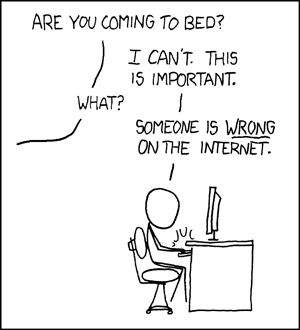
This post has nothing to do with genealogy. A lot to do with blogging, and socializing on the internet. (And off the internet.) Some people will see perhaps connections to other blog posts elsewhere. However, I am making this post generic so that I can direct people in the future to this post, and say, "Read this - these are my thoughts." They will apply today; They will apply in the future. This way I don't have to retype them. If you think these thoughts match yours in a future instance, feel free to direct people here as well.
I first started participating in internet discussions in college back in 1988, when the internet was still called "Bitnet." I particularly enjoyed the political discussions, so I am well used to the heated arguments that tend to develop.
I'm also still amazed at how often people resort to insults and name-calling. The ad hominem attack isn't new. We see it a lot on what passes for television commentary today, but poet, Jonathan Swift (1667-1745), was a master at the ad hominem. (Two poems about a politician named Richard Tighe, with whom Swift disagreed.) Still, it may be old, but it's not a very useful type of argument. It only serves to make the individual you're arguing with either angry at you, or depressed about themselves, or both.
I like to put a little twist on the schoolyard chant:
About 12 years ago I read a book that made an incredible impression on me. "Words that Hurt, Words that Heal" by Rabbi Joseph Telushkin. He talks about the power of words, mixing religious quotes, with anecdotes from the newspaper and history. He covers a lot of ground from malicious (and non-malicious) gossip to criticism to public humiliation. He also discusses how to use the power of words for good.
Telushkin begins by arguing that the tongue is the most difficult muscle in the body for most people to control. If you think you can control your tongue, he suggests attempting to go 24 hours without saying something negative about anyone. To their face, or behind their back. And if we can't do that, we have to admit we have a problem, because if we can't go 24 hours without drinking, or without smoking, we know we are addicted. And we know we need help. [And I'm not referring to negative things about politicians. I'm referring to negative things about your neighbor, your postman, your cousin, your co-worker, or even your friend.]
It should be noted that Telushkin admits he struggles with it at times. I do, too. All of humanity does. But the point is to struggle with it, and reduce the hurt we cause from our words.
A few quotes
Whoever shames his neighbor in public, it is as if he shed his blood.”—(Babylonian Talmud. Bava Mezia 58b)
***
Before you criticize somebody, ask yourself three questions:
1. How do I feel about offering this criticism? Does it give me pleasure or pain?
If part of you is looking forward to it, hold back. Your motives are probably at least partly insincere (you don’t so much wish to help this person as relish cutting him down to size) and your listener will probably respond defensively and reject your critique.
If the thought of critiquing another pains you, yet you feel impelled to speak up, do so. Your motives are probably sincere; your concern for the other person will shine through, making it likely that he or she will be able to accept, or at least hear, your criticism.
2. Does my criticism offer specific ways to change?
3. Are my words non-threatening and reassuring?
***
When offering criticism …remember the three sugestions of Moses Maimonides, the medieval Jewish philosopher and Rabbi
1. Administer the rebuke in private. 2. Speak to the offender gently and tenderly 3. Point out that he is only speaking for the wrongdoer’s own good.
If you'd like to read more about what Rabbi Telushkin has to say:
Etiquette tells us to avoid discussion of Politics and Religion. However, a family historian's role is to research and tell the life stories of ancestors, and their collateral kin. Religion and Politics often play a central role in those life stories. Defenestration of the core beliefs our ancestors held goes against the entire purpose of our pursuit.
[Defenestration is the act of throwing someone or something out of a window. The term was coined around the time of two incidents in Prague Castle in the years 1419 and 1618. The first was politically-motivated, and the second was religiously motivated. So the word is appropriate for several reasons.]
I'll leave Politics for a different day. Today, I'd like to discuss religion, as today is Shavuot on the Jewish calendar - the holiday commemorating the handing down of the Torah on Mt. Sinai.
It's possible one or two readers, who know me and my family only through this blog, may have been slightly confused by combinations of blog posts which have hinted at an obvious diversity present in my ancestry that isn't present in every family. My paternal ancestry is Jewish as far back as anyone knows. My mother's paternal ancestry is Jewish as far back as anyone knows. My mother's maternal ancestry, however, contains Puritans, Mennonites, Methodists, Lutherans, Choctaws and Cherokee. [The last two are unproven, though I have no doubts from the testimony provided in front of The Dawes Commission, that my Hartley ancestors believed they had fairly recent Native American blood.]
If I talk about my ancestry, I could say it is 75% Jewish, and 25% a mixture of Christian and Native American religions. However, that is my ancestry. I, personally, am 100% Jewish. Just as I am 100% American, even though my non-Native American ancestry comes from all over Eastern and Western Europe. I had a small problem with the title of the genealogy series NBC recently imported from England (Who Do You Think You Are). I know who I am. I am interested in finding out more concerning my ancestors, but that won't change my identity.
How do I handle my diverse ancestry in my research?
How should I handle it? I am equally interested in the tombstones of my second great grandfather, Moshe Leyb Cruvant (1857-1911), and my more distant ancestor, Barnabas Horton (1600-1680), despite their disparate beliefs.
Many of my ancestors of various religious faiths arrived in America, fleeing from religious persecution. Brothers Myndert (1636-1706) and Carsten Frederickse (1638-1688) helped found the first Lutheran church in Albany, New Netherland. Israel Swayze (1753-1844) hosted Methodist church meetings in his Beaverdams, Ontario home. Rev. Henry Rosenberger (1725-1809) was a Mennonite minister in Bucks County, Pennsylvania. While all of different religious faiths, religion played a central role in each of their lives. Just as it does mine, though perhaps to a slightly less degree.
In my Jewish family history research I wasn't too surprised when I uncovered a handful of variations on Sholom Aleichem's heartbreaking story of Tevye and his daughter, Chava - intermarriages that led to a severing of family ties. These occurred primarily among children of those who immigrated between 1880-1900. Later intermarriages didn't lead to the same result. What did surprise me was the discovery of a hint of something in the distant past of one branch of my maternal grandmother's tree.
At the end of his introduction to A Genealogical Record of the Descendants of Henry Rosenberger of Franconia, Montgomery Co. Pa; Together with Historical and Biographical Sketches (1906) author, Rev. Abraham James Fretz, writes,
"Note. — There is no doubt that Henry Rosenberger, Sr., of Franconia. was the pioneer emigrant, and that he in common with other Mennonites fled from Germany on account of religious persecution. Of the earlier history of the family...we know nothing. We have seen Rosenbergers direct from Austria and Germany and one Rosenberg from Prussia. One of the former from Austria claimed to be of an old Austrian Rosenberger stock, and were Jews. The last mentioned Rosenberg, from Prussia, was also a Jew."
Fretz appears to have conducted a 'surname study' and interviewed anybody he could find with the Rosenberger name, doing his best to connect anyone he could. He may have been unable to connect these Jewish branches, but felt obliged to indicate they existed, and let the family draw their own conclusions. Any historical 'tribal ties', though, may be too far in the past for research to uncover.
Religion in general has long fascinated me. In college I took several courses studying Eastern religions, Islam, Judaism, Christianity, and Native American theology. Since I am confident nothing I find in my research will change my own beliefs, there is no reason for me to fear researching the beliefs of my ancestors. On the contrary, learning 'what made them tick' helps me to better understand who they were. In short, when I research my ancestors, I throw nothing out of the window.
Transylvania, Holland, Alsace, Poland, England, Germany, Lithuania and Texas all contain soil upon which ancestors dwelt; Farmers, beekeepers, shepherds, tailors, blacksmiths, salesmen, clergy, judges, and doctors.
As I research ancestral lines I discover some ancestors celebrated Hanuka, others Christmas, and still others the Green Corn Ceremony; Jewish, Methodist Episcopalian, Puritan, Christian Scientist, Mennonite, Choctaw, and Cherokee.
I shall never find the records for my distant ancestors who either came to this continent by crossing the Land Bridge, or originally emerged from the Nanih Waiya in Mississippi.
I delve through obituaries, microfilm depositories, internet databases; I interview relatives, and rummage through attics.
What I find doesn't alter who I am; It illuminates the divergent, yet still intersecting paths of my ancestors.




 Posts
Posts