My wife and I are in the process of adopting twin boys.
Many questions have popped into my mind over the past few weeks, and one of them is what our social media policy should be.
I am a very public person. You can find out a lot of information about me on the internet. Some, perhaps, I might wish you couldn't. (Some I might attempt to see if I can remove before my sons-to-be are of internet surfing age.) However, almost everything I have put online about myself, I have made a conscious decision to do so. I have a policy on this blog of not sharing photographs of living relatives without being absolutely sure they will approve. The boys are only 1 year old, so they don't have the ability to consent, yet.
This blog is public, and indexed by search engines, which is one reason I refrain from sharing photographs of and stories about living relatives. My Facebook account is visible only to 'friends.' However, those Facebook friends include dozens of people I have never met - mostly fellow genealogists. A lot of them I feel like I know through their blogs, but I don't really know them. And there are a handful of other 'friends' I only know through the internet. Facebook does make it relatively easy to share posts with only a select group of friends, and I could divide my friend list between those people I have met, and those I haven't.
Then there is the question of whether I need to go through the process of removing geotags from photographs that I do choose to upload. This is an easier one for me to answer. The main concerns with geotags is that they can pinpoint the location the photograph was taken. So if you post a photograph when you are on vacation, someone might know you are on vacation. If you post a photograph of your kid at home, someone can figure out where you live. I don't post vacation photos until I am home. It's a common safety precaution whether one has kids or not. And whether or not I post photographs taken at home, it is very easy to find my home address on the internet. (A little more difficult since my wife and I dropped our landline, but still fairly easy.) Posting photographs with geotags will not lead to a decrease in privacy. At least not in my situation.
Lots of my friends post photographs of their children on Facebook, and while the boys haven't yet been placed into our home, that date is only days away, and I already am feeling the 'proud father' cravings to share my naches ('joy') with the world.
Input is welcomed.
Showing posts with label Social Networking. Show all posts
Showing posts with label Social Networking. Show all posts
Friday, February 28, 2014

Sunday, July 22, 2012
Tumbling for Genealogy?
I work in the non-profit industry, and noticed a recent article in the NonProfit Times discussing organizations discovering the social networking site, Tumblr.

I'm not completely new to Tumblr. I have another one focused on the author, Victor Hugo. However, I post very infrequently, and have only 3 followers. A vacation image posted there a week ago has now received 12 likes or reblogs. (None of the individuals are among my followers, so they too found the image through the tags. I'm not surprised Napoleon is more popular than a cemetery.)

As on Twitter, what tags one uses will greatly impact how many people see the post.
As the individual in the article above was quoted, Tumblr is for the short attention-spanned. The focus is on images and videos, not words. I like words. So I post more frequently to this blog, or to the social networks where I can be more long-winded.
Those who are using social networking as a promotion tool probably should have a presence on every popular social networking site. You need to be where the potential customer is; you can't force the potential customer to come to you. Tumblr is very popular.
A family historian/geneablogger might find Tumblr useful to share images of tombstones, or family history documents, while providing a link from the entries back to their primary blog where they add more details for those with greater attention spans. Not just for attracting the attention of potential customers if you are a professional genealogist, but also for getting noticed by potential cousins.
[First Book, which provides books for children] has more followers on the microblogging site Tumblr than it has on any other social media outlet.
“Tumblr, to me, is a great platform to reach a new, young audience,” said Rochee Jeffrey, FB’s social media coordinator.
Tumblr is a blogging tool “for the short attention span generation,” said Chris Youngblood, director of strategic partnerships for the Melbourne, Fla.-based To Write Love On Her Arms (TWLOHA). Tumblr blogs are generally multimedia heavy: lots of photos, videos, audio clips and infographics, with short pieces of text. Long-form content need not apply. That’s what you do on a regular blog.A week ago I created a tumblr blog, posted a vacation image, and told no one. In that week three people have 'reblogged' the image and an additional person has 'liked' it. Somewhat impressive since the only way the image could have been found is through the three 'hashtags' I put on the post.
I'm not completely new to Tumblr. I have another one focused on the author, Victor Hugo. However, I post very infrequently, and have only 3 followers. A vacation image posted there a week ago has now received 12 likes or reblogs. (None of the individuals are among my followers, so they too found the image through the tags. I'm not surprised Napoleon is more popular than a cemetery.)
As on Twitter, what tags one uses will greatly impact how many people see the post.
As the individual in the article above was quoted, Tumblr is for the short attention-spanned. The focus is on images and videos, not words. I like words. So I post more frequently to this blog, or to the social networks where I can be more long-winded.
Those who are using social networking as a promotion tool probably should have a presence on every popular social networking site. You need to be where the potential customer is; you can't force the potential customer to come to you. Tumblr is very popular.
A family historian/geneablogger might find Tumblr useful to share images of tombstones, or family history documents, while providing a link from the entries back to their primary blog where they add more details for those with greater attention spans. Not just for attracting the attention of potential customers if you are a professional genealogist, but also for getting noticed by potential cousins.
Tuesday, July 12, 2011
Who Will Google Kill This Time?
Disclaimer:
Back in June of 2009 I predicted, "Google Wave is Coming; It's Undertow will Claim at least One Victim."
My record on predictions has historically been pretty lousy.
***
I've been playing on Google's new social network, Google Plus (or Google+ or G+), for 4 days now. Lots of people are talking about what it will replace. And since we like violent imagery, the word 'killer' gets bandied about.
Twitter-Killer?
Certainly a lot of the same chat that goes on with Twitter I see at Google+. Currently there isn't anything to compare with Twitter's hashtags. Without something of this nature, Twitter survives. As someone who has been on Twitter for awhile, and uses it, one of the cool things about Twitter is the ability to use hashtags to find other people talking about the same topics.
Google+'s Sparks could be a replacement for hashtags, if they turned it inward, and allowed you to search for public posts. Currently, however, Sparks is only focused outward, yielding Google search results for specific terms.
Of course, Google is the "King of Search" and Google+ is currently only in "Field-Test" mode. Many have predicted that they will integrate search within the network and allow us to find posts by keyword. At that point, I do wonder what distinguishes Twitter to allow it to coexist. Especially since I feel a large percentage of Twitter users are the type of individual who are likely to sign up for Google+.
It's possible people will keep posting to Twitter, posting the same status updates to both places, as they post them to Facebook and Twitter now. As soon as Google releases the G+ API, there will be apps to make this simple. But I see myself already losing interest in Twitter, and the only thing keeping me there is the hashtags.
Tumblr-Killer?
For those unfamiliar with Tumblr, it is a blogging platform excelling at the sharing, and resharing, of media (images, video, and audio). G+ definitely does this very well.
However, like Twitter, Tumblr thrives on hashtags. So until Google+ integrates an internal search engine, it's safe. However, once it does, I suspect use of Tumblr will drop as users realize their posts will get more views on Google+.
Facebook-Killer?
So far I have found only two things Facebook can do that Google+ can't.
1) Games. [Many will see this as a plus in favor of Google]
2) Event managing
While many people use Facebook to schedule events, and invite their friends, you can't do that YET with Google+. However, all signs indicate that Google intends to integrate Google+ with as many of its products as possible. And Google Calendar is one of its products. I don't know when it's coming, but I think it's a safe bet that they will release some sort of event management function.
However, regardless of whether Social Network A and B can do the same things, and regardless of which one does it better, a Social Network must contain one essential thing. The People With Whom You Wish to Network.
The First Adopters of Google+ are highly extolling its virtues. But if we can't convince our less techy friends, and family members to join us, we will need to maintain both a Facebook and a Google+ account. At least we will if we feel the need to continue to 'network' with both groups.
I ask myself the crucial question: When will I delete my Facebook account?
After less than a week, still in Field-Test invite only stage, almost all the fellow Genealogists who I networked with on Facebook are on G+. I have 95 'friends' on Facebook who are in my 'Genealogy' list. I have 71 individuals in my Genealogy circle on Google+.
Along with:
One member of the genealogy community has gotten a fair amount of press for his G+ activity. Paul Allen, founder of Ancestry.com. Using Ancestry's census statistics, and surname counts on G+, he estimated G+ would surpass 10,000,000 users today. Google has neither confirmed nor denied his estimates.
I find myself asking other crucial questions:
Why did I join Facebook originally?
What purpose does a social network fill for me?
If my family wants to talk to me, they either pick up a phone, or send me an email.
If my close friends wish to talk to me, they either pick up a phone, or send me an email.
What Facebook has done for me is get me in touch with people I had lost track of from earlier periods in my life (school, former jobs, etc).
I see the following progression of events for me:
1) I will stop posting new status posts on Facebook. I predict that happens now. I'm not including occasional posts to Facebook reminding people - hey, if you want to see what's going on with me, look at my public G+ posts, or join up, and I'll add you to my circles.
2) I will only use Facebook to read (and comment) on other posts.
3) I will delete everyone on Facebook that has a Google+ account, and is clearly using it.
4) I will monitor my usage of Facebook.
I predict, before the first snowfall this winter, I will delete my Facebook account.
However, I foresee Google+ and Facebook coexisting. There will be more then enough people who prefer each network. Some people will feel the need to be on both. Others will make their choices.
Back in June of 2009 I predicted, "Google Wave is Coming; It's Undertow will Claim at least One Victim."
My record on predictions has historically been pretty lousy.
***
I've been playing on Google's new social network, Google Plus (or Google+ or G+), for 4 days now. Lots of people are talking about what it will replace. And since we like violent imagery, the word 'killer' gets bandied about.
Twitter-Killer?
Certainly a lot of the same chat that goes on with Twitter I see at Google+. Currently there isn't anything to compare with Twitter's hashtags. Without something of this nature, Twitter survives. As someone who has been on Twitter for awhile, and uses it, one of the cool things about Twitter is the ability to use hashtags to find other people talking about the same topics.
Google+'s Sparks could be a replacement for hashtags, if they turned it inward, and allowed you to search for public posts. Currently, however, Sparks is only focused outward, yielding Google search results for specific terms.
Of course, Google is the "King of Search" and Google+ is currently only in "Field-Test" mode. Many have predicted that they will integrate search within the network and allow us to find posts by keyword. At that point, I do wonder what distinguishes Twitter to allow it to coexist. Especially since I feel a large percentage of Twitter users are the type of individual who are likely to sign up for Google+.
It's possible people will keep posting to Twitter, posting the same status updates to both places, as they post them to Facebook and Twitter now. As soon as Google releases the G+ API, there will be apps to make this simple. But I see myself already losing interest in Twitter, and the only thing keeping me there is the hashtags.
Tumblr-Killer?
For those unfamiliar with Tumblr, it is a blogging platform excelling at the sharing, and resharing, of media (images, video, and audio). G+ definitely does this very well.
However, like Twitter, Tumblr thrives on hashtags. So until Google+ integrates an internal search engine, it's safe. However, once it does, I suspect use of Tumblr will drop as users realize their posts will get more views on Google+.
Facebook-Killer?
So far I have found only two things Facebook can do that Google+ can't.
1) Games. [Many will see this as a plus in favor of Google]
2) Event managing
While many people use Facebook to schedule events, and invite their friends, you can't do that YET with Google+. However, all signs indicate that Google intends to integrate Google+ with as many of its products as possible. And Google Calendar is one of its products. I don't know when it's coming, but I think it's a safe bet that they will release some sort of event management function.
However, regardless of whether Social Network A and B can do the same things, and regardless of which one does it better, a Social Network must contain one essential thing. The People With Whom You Wish to Network.
The First Adopters of Google+ are highly extolling its virtues. But if we can't convince our less techy friends, and family members to join us, we will need to maintain both a Facebook and a Google+ account. At least we will if we feel the need to continue to 'network' with both groups.
I ask myself the crucial question: When will I delete my Facebook account?
After less than a week, still in Field-Test invite only stage, almost all the fellow Genealogists who I networked with on Facebook are on G+. I have 95 'friends' on Facebook who are in my 'Genealogy' list. I have 71 individuals in my Genealogy circle on Google+.
Along with:
- A handful of close friends
- No family (excepting my fiancee)
- No fellow high school or college alums.
One member of the genealogy community has gotten a fair amount of press for his G+ activity. Paul Allen, founder of Ancestry.com. Using Ancestry's census statistics, and surname counts on G+, he estimated G+ would surpass 10,000,000 users today. Google has neither confirmed nor denied his estimates.
I find myself asking other crucial questions:
Why did I join Facebook originally?
What purpose does a social network fill for me?
If my family wants to talk to me, they either pick up a phone, or send me an email.
If my close friends wish to talk to me, they either pick up a phone, or send me an email.
What Facebook has done for me is get me in touch with people I had lost track of from earlier periods in my life (school, former jobs, etc).
I see the following progression of events for me:
1) I will stop posting new status posts on Facebook. I predict that happens now. I'm not including occasional posts to Facebook reminding people - hey, if you want to see what's going on with me, look at my public G+ posts, or join up, and I'll add you to my circles.
2) I will only use Facebook to read (and comment) on other posts.
3) I will delete everyone on Facebook that has a Google+ account, and is clearly using it.
4) I will monitor my usage of Facebook.
I predict, before the first snowfall this winter, I will delete my Facebook account.
However, I foresee Google+ and Facebook coexisting. There will be more then enough people who prefer each network. Some people will feel the need to be on both. Others will make their choices.
Thursday, November 4, 2010
Words that Hurt, Words that Heal
This post has nothing to do with genealogy. A lot to do with blogging, and socializing on the internet. (And off the internet.) Some people will see perhaps connections to other blog posts elsewhere. However, I am making this post generic so that I can direct people in the future to this post, and say, "Read this - these are my thoughts." They will apply today; They will apply in the future. This way I don't have to retype them. If you think these thoughts match yours in a future instance, feel free to direct people here as well.
I first started participating in internet discussions in college back in 1988, when the internet was still called "Bitnet." I particularly enjoyed the political discussions, so I am well used to the heated arguments that tend to develop.
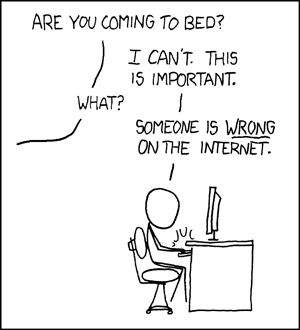
I'm also still amazed at how often people resort to insults and name-calling. The ad hominem attack isn't new. We see it a lot on what passes for television commentary today, but poet, Jonathan Swift (1667-1745), was a master at the ad hominem. (Two poems about a politician named Richard Tighe, with whom Swift disagreed.) Still, it may be old, but it's not a very useful type of argument. It only serves to make the individual you're arguing with either angry at you, or depressed about themselves, or both.
I like to put a little twist on the schoolyard chant:
There's a poem, Incident, by Countee Cullen (1903-1946) that makes this point well.
About 12 years ago I read a book that made an incredible impression on me. "Words that Hurt, Words that Heal" by Rabbi Joseph Telushkin. He talks about the power of words, mixing religious quotes, with anecdotes from the newspaper and history. He covers a lot of ground from malicious (and non-malicious) gossip to criticism to public humiliation. He also discusses how to use the power of words for good.
Telushkin begins by arguing that the tongue is the most difficult muscle in the body for most people to control. If you think you can control your tongue, he suggests attempting to go 24 hours without saying something negative about anyone. To their face, or behind their back. And if we can't do that, we have to admit we have a problem, because if we can't go 24 hours without drinking, or without smoking, we know we are addicted. And we know we need help. [And I'm not referring to negative things about politicians. I'm referring to negative things about your neighbor, your postman, your cousin, your co-worker, or even your friend.]
It should be noted that Telushkin admits he struggles with it at times. I do, too. All of humanity does. But the point is to struggle with it, and reduce the hurt we cause from our words.
A few quotes
I first started participating in internet discussions in college back in 1988, when the internet was still called "Bitnet." I particularly enjoyed the political discussions, so I am well used to the heated arguments that tend to develop.
I'm also still amazed at how often people resort to insults and name-calling. The ad hominem attack isn't new. We see it a lot on what passes for television commentary today, but poet, Jonathan Swift (1667-1745), was a master at the ad hominem. (Two poems about a politician named Richard Tighe, with whom Swift disagreed.) Still, it may be old, but it's not a very useful type of argument. It only serves to make the individual you're arguing with either angry at you, or depressed about themselves, or both.
I like to put a little twist on the schoolyard chant:
Sticks and stones
may break some bones
but the hurt from words
lasts longer.
There's a poem, Incident, by Countee Cullen (1903-1946) that makes this point well.
About 12 years ago I read a book that made an incredible impression on me. "Words that Hurt, Words that Heal" by Rabbi Joseph Telushkin. He talks about the power of words, mixing religious quotes, with anecdotes from the newspaper and history. He covers a lot of ground from malicious (and non-malicious) gossip to criticism to public humiliation. He also discusses how to use the power of words for good.
Telushkin begins by arguing that the tongue is the most difficult muscle in the body for most people to control. If you think you can control your tongue, he suggests attempting to go 24 hours without saying something negative about anyone. To their face, or behind their back. And if we can't do that, we have to admit we have a problem, because if we can't go 24 hours without drinking, or without smoking, we know we are addicted. And we know we need help. [And I'm not referring to negative things about politicians. I'm referring to negative things about your neighbor, your postman, your cousin, your co-worker, or even your friend.]
It should be noted that Telushkin admits he struggles with it at times. I do, too. All of humanity does. But the point is to struggle with it, and reduce the hurt we cause from our words.
A few quotes
Whoever shames his neighbor in public, it is as if he shed his blood.”—(Babylonian Talmud. Bava Mezia 58b)
***
Before you criticize somebody, ask yourself three questions:
1. How do I feel about offering this criticism? Does it give me pleasure or pain?
If part of you is looking forward to it, hold back. Your motives are probably at least partly insincere (you don’t so much wish to help this person as relish cutting him down to size) and your listener will probably respond defensively and reject your critique.
If the thought of critiquing another pains you, yet you feel impelled to speak up, do so. Your motives are probably sincere; your concern for the other person will shine through, making it likely that he or she will be able to accept, or at least hear, your criticism.
2. Does my criticism offer specific ways to change?
3. Are my words non-threatening and reassuring?
***
When offering criticism …remember the three sugestions of Moses Maimonides, the medieval Jewish philosopher and RabbiIf you'd like to read more about what Rabbi Telushkin has to say:
1. Administer the rebuke in private.
2. Speak to the offender gently and tenderly
3. Point out that he is only speaking for the wrongdoer’s own good.
Thursday, February 11, 2010
The Beeswax on Google Buzz
With Google Buzz, Google has entered the Social Networking foray. (Again. It's been here in the past - Orkut and Wave.)
Here's their video explaining stuff
What follows is a summary of what I have figured out and learned in the past 24 hours.
Some important notes regarding privacy and usage:
There are a couple things that are very appealing about Buzz.
If you do find yourself using Google Buzz, and wish to follow me, you can just click on the "find people" link and search for my real name. Currently there will be five results. Two have photographs of me next to them. As I stated above, I have two Buzz accounts. The one that says "Writer, St. Louis, MO" is my personal account, and is linked to my twitter under the username Gavroche, and soon should be linked to my non-genealogy blog. The one that doesn't say this is linked to this blog, and my twitter under the username TransDutch. I've been careful not to duplicate feeds so those who want can follow both and not get duplicate items in their 'Buzz stream."
Update 2/12: Google has already made updates to address some of the privacy concerns
Here's their video explaining stuff
What follows is a summary of what I have figured out and learned in the past 24 hours.
Some important notes regarding privacy and usage:
- It's being rolled out automatically to anyone with a Google Gmail account. If you have a Gmail account, and don't have Buzz yet, you should soon. I'm not sure how long the rollout is supposed to take. If you don't have a Gmail account, they're free. (Google is devious.)
- Users can syndicate their Twitter, Flickr, Picasa, and Blog feeds (pretty much anything with an RSS feed) so that it appears in their Buzz 'stream'.
- Those with a current Gmail account are automatically set to 'follow' a grouping of their most frequent contacts. This has upset some, though it is easy to 'unfollow', and no one gets notified if you do.
- Those you are following, and those following you, are listed by default on your Google Profile. For some, this Google Profile is searchable on the web. (You have to have intentionally set it up this way for this to be the case. Here's my Google Profile if you want to see what one looks like.) Some have proclaimed this shouldn't be the default. But I believe it is the default on Twitter, and I haven't heard people complain about that. Of course, for most people, their email contacts are a much more diverse group than their Twitter followers. Regardless, you can edit your profile, and turn this feature off. Once turned off, no one will see your list of followers, or followed. Not even others on that list. (I have two gmail accounts, and thus two Buzz accounts, and have been able to verify this.)
- When someone replies to your "Buzz" (aka: Status Update), this reply appears in your Gmail inbox, as well as in your "Buzz" folder. This also happens if you comment on someone else's buzz, and someone comments after you. It's not immediately obvious how to turn this 'off.' You actually can't. But you can set up a mail filter that automatically archives these notifications, skipping the inbox.
- There is a Mobile version of Buzz. It is currently available for iPhone and Google Android. The version for Blackberry says 'coming soon.' I have a Blackberry, so I can't tell you anything about the mobile version yet. (grumble.)
- For whatever reason, if you decide you don't want any part of Google Buzz, you can scroll down to the very bottom of your Gmail screen, and in tiny print you will see a link that says "Turn off Buzz."
There are a couple things that are very appealing about Buzz.
- It's Facebook without Farmville, Farkle, or F'in MaFia! -- It can provide the status update, social networking capability without the distraction of the Facebook Apps.
- Syndication -- It's easy to syndicate your current social networking feeds so they appear in Buzz. (Of course, you can't syndicate your Buzz feed so they appear elsewhere. Why would Google want to offer that functionality?)
If you do find yourself using Google Buzz, and wish to follow me, you can just click on the "find people" link and search for my real name. Currently there will be five results. Two have photographs of me next to them. As I stated above, I have two Buzz accounts. The one that says "Writer, St. Louis, MO" is my personal account, and is linked to my twitter under the username Gavroche, and soon should be linked to my non-genealogy blog. The one that doesn't say this is linked to this blog, and my twitter under the username TransDutch. I've been careful not to duplicate feeds so those who want can follow both and not get duplicate items in their 'Buzz stream."
Update 2/12: Google has already made updates to address some of the privacy concerns
Friday, January 8, 2010
Re-Defining Friendships
Almost anyone on Facebook (or other online 'social networks') goes through the same decision making process. Do we or do we not ‘accept’ a Friend request from someone we barely know? The former high school classmate who never spoke to you once in those four years? The colleague who works in a different department, and you think you might know who they are, but you aren’t sure? The ‘Friend’ of a ‘Friend’ who liked the comment you made on one of your friend’s posts? The complete stranger who came across your blog, liked what they read?
As a member of the genealogy-blogging community, I’ve received scores of friend requests from fellow genealogists. I’ve accepted all of them.
And then there is the next issue. At what point do you end one of these new ‘friendships.’ Is there anything that would cause me to defriend someone?
I reached that point today.
It wasn’t because they were filling my newsfeed with silly game statuses. I long ago learned how to hide those.
It was because of a racist comment they made. The comment was also political, but the politics didn’t matter to me. I have ‘real world’ friends who have diametrically opposed political views. I’ve had a couple political discussions with some Facebook friends who are otherwise unknown to me – and I haven’t defriended them because they have opinions that differ from mine. But I won’t tolerate racism.
This is where the party ends.
It’s likely they will recognize themselves, as I suspect Facebook notifies you when you have been defriended, and I suspect they read my blog.
They'll probably insist what they said wasn’t racist, or that I’m over-reacting. That’s OK with me. They are entitled to believe what they want to believe. But, to me, what they said was racist, and since I don’t really know them, I see no reason I need to keep them on my list of ‘friends.’
As a member of the genealogy-blogging community, I’ve received scores of friend requests from fellow genealogists. I’ve accepted all of them.
And then there is the next issue. At what point do you end one of these new ‘friendships.’ Is there anything that would cause me to defriend someone?
I reached that point today.
It wasn’t because they were filling my newsfeed with silly game statuses. I long ago learned how to hide those.
It was because of a racist comment they made. The comment was also political, but the politics didn’t matter to me. I have ‘real world’ friends who have diametrically opposed political views. I’ve had a couple political discussions with some Facebook friends who are otherwise unknown to me – and I haven’t defriended them because they have opinions that differ from mine. But I won’t tolerate racism.
This is where the party ends.
It’s likely they will recognize themselves, as I suspect Facebook notifies you when you have been defriended, and I suspect they read my blog.
They'll probably insist what they said wasn’t racist, or that I’m over-reacting. That’s OK with me. They are entitled to believe what they want to believe. But, to me, what they said was racist, and since I don’t really know them, I see no reason I need to keep them on my list of ‘friends.’
Tuesday, November 10, 2009
Nine Ways to Read this Blog
Below are nine ways for you to read this blog on a regular basis. Some are easier than others. I am not going to go into technical detail on how -- but I do link to explanations for those who wish to familiarize themselves with the various methods.
1) You can return to this website on a regular basis and see if there is an update. Typing the address into the address bar each time, or conducting a search for the blog name in your favorite search engine.
2) You can create a bookmark. (Check the menus at the top of your web browser, there is probably one that says Bookmarks or Favorites). And then click on the bookmark whenever you want to return.
3) In the upper left corner of the blog, below the masthead, you should see something that says "Email Subscriptions." Enter your email address, click on "Get Email Updates", and follow the instructions.
(If you don't see this in the upper left, you aren't on my blog. You're probably already using one of the methods described below. Follow this link)
You will receive a daily email with the latest updates. Or you can select a different delivery schedule - some more often, some less. These email subscriptions are powered by FeedBlitz.
4) Immediately below "Email Subscriptions" you see "Subscribe to my Podcast".
[If you don't see it, you skipped over #3, go back.]
Audio versions of all of my posts can be directly downloaded to iTunes, Zune, or other podcast players. These aren't me reading the posts, but a computer voice reading it. This can generate some humorous mistakes, but in general, it's pretty good. You will also miss out on the images, so Wordless Wednesday posts, for example, are a little less interesting. These audio versions are powered by Odiogo.
5) Moving down the lefthand column you see "Subscribe via RSS" and links for both my posts, and my comments. Here's some more information about RSS for those unfamiliar. And I recommend Google's Reader for those new to RSS.
6) If you are a friend on Facebook, my posts are automatically syndicated via their Notes feature. (I've noticed that I often get as many comments on my posts through Facebook as through the blog itself).
Facebook Notes does remove complicated scripts, such as embedded YouTube videos, and embedded Google Book frames. I've also noticed the spacing between paragraphs can get messed up. But text and images remain mostly the same.
My Facebook Profile
7) My posts are also syndicated on my GenealogyWise profie
8) Links to all my posts are automatically fed to my Twitter account. You can follow these links directly to my blog.
9) At AllTop's list of Genealogy Sites you can mouseover the links to my last five posts and read the beginnings of each. And then follow the link if interested in reading more.
If anyone knows any other common forms/places of syndication they wish they were able to access my blog from...let me know.
1) You can return to this website on a regular basis and see if there is an update. Typing the address into the address bar each time, or conducting a search for the blog name in your favorite search engine.
2) You can create a bookmark. (Check the menus at the top of your web browser, there is probably one that says Bookmarks or Favorites). And then click on the bookmark whenever you want to return.
3) In the upper left corner of the blog, below the masthead, you should see something that says "Email Subscriptions." Enter your email address, click on "Get Email Updates", and follow the instructions.
(If you don't see this in the upper left, you aren't on my blog. You're probably already using one of the methods described below. Follow this link)
You will receive a daily email with the latest updates. Or you can select a different delivery schedule - some more often, some less. These email subscriptions are powered by FeedBlitz.
4) Immediately below "Email Subscriptions" you see "Subscribe to my Podcast".
[If you don't see it, you skipped over #3, go back.]
Audio versions of all of my posts can be directly downloaded to iTunes, Zune, or other podcast players. These aren't me reading the posts, but a computer voice reading it. This can generate some humorous mistakes, but in general, it's pretty good. You will also miss out on the images, so Wordless Wednesday posts, for example, are a little less interesting. These audio versions are powered by Odiogo.
5) Moving down the lefthand column you see "Subscribe via RSS" and links for both my posts, and my comments. Here's some more information about RSS for those unfamiliar. And I recommend Google's Reader for those new to RSS.
6) If you are a friend on Facebook, my posts are automatically syndicated via their Notes feature. (I've noticed that I often get as many comments on my posts through Facebook as through the blog itself).
Facebook Notes does remove complicated scripts, such as embedded YouTube videos, and embedded Google Book frames. I've also noticed the spacing between paragraphs can get messed up. But text and images remain mostly the same.
My Facebook Profile
7) My posts are also syndicated on my GenealogyWise profie
8) Links to all my posts are automatically fed to my Twitter account. You can follow these links directly to my blog.
9) At AllTop's list of Genealogy Sites you can mouseover the links to my last five posts and read the beginnings of each. And then follow the link if interested in reading more.
If anyone knows any other common forms/places of syndication they wish they were able to access my blog from...let me know.
Wednesday, September 30, 2009
Kutano - Combining Twitter and Google's Sidewiki into one App
As I mentioned in my post about Google's SideWiki -- they also opened up their API to allow others to create applications that use comments left in SideWiki.
I received the below email yesterday (Tuesday) morning from a Marketing Manager at Kutano:
First the technical requirements:
Kutano claims that it works on Firefox 3 with Windows (x64 or x86 of XP and above), MacOSX, or Linux. And with Internet Explorer 7 or 8 (32-bits) with Windows (x64 or x86 of XP and above)
I am using it on Firefox 3 with MacOSX.
The Kutano Experience
As a Twitter Application
Kutano creates a fully functional Twitter sidebar on your browser, as can be seen below, but the arrow button in the lower right minimizes the sidebar. Two of the buttons to the right of the textbox are "Tweet about this page" and "insert current page URL". For both Kutano creates its own shortened url for the page. For the former it also adds the text "Reading __Page Title__"

 Alone, these are nice added features.
As a SideTwitter
 In the above image you can see all the tweets for my recent Wordless Wednesday post. The one tweet from my TransDutch account which automatically tweets every blog entry. Occasionally some of my posts get a little more TwitterLove, but to illustrate the features better, I went to CNN.com
 Now I am looking at all the Discussions for CNN. The yellow boxes near the bottom of the panel represent comments pulled in from Google's SideWiki application. The other comments are from Kutano. The numbers in the icons indicate how many posts in each discussion thread.
The email I received from Kutano also indicated Google's API for SideWiki allows them to pull in the comments from SideWiki to use in their App. However, it doesn't provide a mechanism to send comments in the other direction. So discussions that take place on Kutano remain on Kutano.
Thoughts
I don't see myself getting involved in too many side-discussions about a page. Unless of course discussions form around my blog, or any other websites I maintain. I expect most people who have a comment about my blog to post it in the comment threads, or email me. However, not every website has a place to leave comments.
I remember a time not too long ago, back when I was in college and frequented the Usenet bulletin boards, where these discussion threads would have been more appealing to me.
For me the benefit of SideWiki (and Kutano) is the ability to leave notes on a page that otherwise doesn't provide a means to do so. (A blog that doesn't allow comments, or a normal web page without a discussion forum.) The note may provide more information the page doesn't already contain -- or indicate any inaccuracies I feel are there.
I do like the ease of use of Kutano as a Twitter application.
I received the below email yesterday (Tuesday) morning from a Marketing Manager at Kutano:
I came across your post about Google SideWiki and wanted to let you know that this morning we are expecting to release what we believe to be the very first Sidewiki client ever!I didn't have time yesterday to test it out, but I have this evening.
Our tool, Kutano, already works as something of a "SideTwitter", showing tweets about each web page and website directly beside the page and allowing for conversations and comments on the page as well. However, as of early this morning (10AM), Kutano will also be pulling in "high quality" comments that are made in Google's Sidewiki.
The advantage of this, aside from being able to collectively view web page related tweets, Sidewiki and Kutano comments in one place, is that Kutano will also allow users to respond to and start interactive discussions around comments made in Sidewiki. Currently, Sidewiki comments are not threaded and there is no way to respond and engage another person that commented on the web page. Additionally, there is not yet a way to have multiple discussion topics on one page. But using Kutano, people will be able to engage in more interactive and topic-varied discussions about each web page using Sidewiki comments as well as existing web page related tweets and Kutano comments. As can already be done with existing Kutano discussions, users will also be able to tweet out entire discussions as well.
First the technical requirements:
Kutano claims that it works on Firefox 3 with Windows (x64 or x86 of XP and above), MacOSX, or Linux. And with Internet Explorer 7 or 8 (32-bits) with Windows (x64 or x86 of XP and above)
I am using it on Firefox 3 with MacOSX.
The Kutano Experience
As a Twitter Application
Kutano creates a fully functional Twitter sidebar on your browser, as can be seen below, but the arrow button in the lower right minimizes the sidebar. Two of the buttons to the right of the textbox are "Tweet about this page" and "insert current page URL". For both Kutano creates its own shortened url for the page. For the former it also adds the text "Reading __Page Title__"

 Alone, these are nice added features.
As a SideTwitter
 In the above image you can see all the tweets for my recent Wordless Wednesday post. The one tweet from my TransDutch account which automatically tweets every blog entry. Occasionally some of my posts get a little more TwitterLove, but to illustrate the features better, I went to CNN.com
 Now I am looking at all the Discussions for CNN. The yellow boxes near the bottom of the panel represent comments pulled in from Google's SideWiki application. The other comments are from Kutano. The numbers in the icons indicate how many posts in each discussion thread.
The email I received from Kutano also indicated Google's API for SideWiki allows them to pull in the comments from SideWiki to use in their App. However, it doesn't provide a mechanism to send comments in the other direction. So discussions that take place on Kutano remain on Kutano.
Thoughts
I don't see myself getting involved in too many side-discussions about a page. Unless of course discussions form around my blog, or any other websites I maintain. I expect most people who have a comment about my blog to post it in the comment threads, or email me. However, not every website has a place to leave comments.
I remember a time not too long ago, back when I was in college and frequented the Usenet bulletin boards, where these discussion threads would have been more appealing to me.
For me the benefit of SideWiki (and Kutano) is the ability to leave notes on a page that otherwise doesn't provide a means to do so. (A blog that doesn't allow comments, or a normal web page without a discussion forum.) The note may provide more information the page doesn't already contain -- or indicate any inaccuracies I feel are there.
I do like the ease of use of Kutano as a Twitter application.
Wednesday, September 23, 2009
Web Annotation: More Competition
The concept of Web Annotation isn't new. Methods of leaving notes on websites for other users of the application to see date back as far as 1999.
The concept is very appealing. Leaving notes that indicate information is outdated or otherwise inaccurate. Leaving notes that expand upon the information that is presented. Leaving comments in the same manner you might jot a note in the margins of a book.
But unfortunately, the more competition there is, the usefulness of each application diminishes, since the user base for each application diminishes.
So until one application is declared a winner, it's hard to know which application is best to use. One might argue what is needed is for a well-established web entity to enter the Web Annotation market and establish themselves as the service to use. And perhaps open their code for others to use so that there can be competing systems that share the same content.
Enter Google SideWiki
Announced this morning on the Google Blog, currently Google SideWiki installs on Firefox and Internet Explorer browsers using Google's Toolbar.
They allow owners of websites to create messages that will always be on the top of the 'SideWiki' for a page. (They can identify what websites you own through which Google Account you are signed into, and what websites are associated with that account.)
And they are offering access to their API (code) so others can write applications that utilize the content left in SideWiki.
The concept is very appealing. Leaving notes that indicate information is outdated or otherwise inaccurate. Leaving notes that expand upon the information that is presented. Leaving comments in the same manner you might jot a note in the margins of a book.
But unfortunately, the more competition there is, the usefulness of each application diminishes, since the user base for each application diminishes.
So until one application is declared a winner, it's hard to know which application is best to use. One might argue what is needed is for a well-established web entity to enter the Web Annotation market and establish themselves as the service to use. And perhaps open their code for others to use so that there can be competing systems that share the same content.
Enter Google SideWiki
Announced this morning on the Google Blog, currently Google SideWiki installs on Firefox and Internet Explorer browsers using Google's Toolbar.
They allow owners of websites to create messages that will always be on the top of the 'SideWiki' for a page. (They can identify what websites you own through which Google Account you are signed into, and what websites are associated with that account.)
And they are offering access to their API (code) so others can write applications that utilize the content left in SideWiki.
Thursday, July 9, 2009
Thoughts on GenealogyWise
Disclaimer-wise: As an aficionado of the English Language, I am predisposed against the new social network website –GenealogyWise – due to their appropriation of the painful-to-the eyes ‘wise’ construction. If there was a way to kill usage of ‘wise’ as a suffix, I would do so. Yes, I am aware there is also a pun on ‘wisdom’ in this case, but this isn’t sufficient to get me to support the corruption of the English language.
The new website was announced on Wednesday, and there was a heavy stampede from geneabloggers – many who had been utilizing Facebook. Several individuals were heard saying that they planned to leave Facebook entirely.
I, for one, am not leaving Facebook. Of course, I was a member of Facebook before the geneablogger stampede towards it, and have many non-genealogist friends with whom I keep in touch using it. My non-genealogist friends won’t be switching to GenealogyWise so there’s no reason for me to leave. If I only networked with other genealogists on Facebook, I could see the temptation to delete my account. But that doesn’t define me.
Those genealogists who do leave Facebook are going to lose a few advantages to my mind.
1) Facebook is a great way to find living cousins – just by searching the directory for your surnames. 99% of these cousins won’t be on GenealogyWise.
2) I have found and left a message on one Facebook group set up for an annual family reunion of not-too-distant cousins. These too can’t really be set up on GenealogyWise since it will be difficult to get family members who aren’t genealogists to join. But a Facebook group could be a great way to keep younger family members interested inbetween reunions.
3) Those genealogists who do research for others may find Facebook is helpful in letting those in your social network know what you are doing as a business. When they decide they want some research done – or someone they know is asking for references – they are more likely to think of you. Your social network isn’t going to follow you to GenealogyWise.
On the other hand, there are a couple things I like about GenealogyWise.
1) I like their option of one rss feed for every blog post on the site. You can subscribe to rss feeds for individual members as well, if you don’t want every post, but the one super-feed is very useful. I find the effect similar to subscribing to tags on Wordpress. Every time someone tags a WordPress.com post with ‘genealogy’ it appears in my blog reader. And every time someone posts a public entry on their GenealogyWise blog, it will now appear in my blog reader.
[Note: by default all profiles and blog posts are readable by anyone on GenealogyWise, meaning they are also likely to get indexed by search engines such as Google. You can go to your settings, and under ‘privacy’ change that to either ‘members only’ or ‘friends only’. However, the posts shouldn’t appear in the rss feed if it is restricted.]
2) Like the Facebook Notes application which allows you to display your outside blog posts on Facebook – or the TwitterFeed application that automatically posts links to your blog posts on Twitter -- GenealogyWise allows you to display your blog posts on your profile page. I know I have friends who read my blog posts on Facebook who otherwise wouldn’t, and I have been told by fellow geneabloggers they are often more likely to read a blog post when they see a link to it on my twitter feed. Similarly, I suspect some may now find my blog posts through my GenealogyWise profile.
Of course, both of these advantages occur from me setting up the profile and respective rss feeds. I don't actually have to ever return to GenealogyWise beyond accepting any friend requests that come in.
There may be some interesting forum and group discussions, but I find I prefer email mailing lists, such as those available on Rootsweb, for these types of discussions. If upon GoogleWave's release, GenealogyWise releases an application that turns these forum discussions into waves accessible through a Wave browser, I anticipate I may well become a participant in some of the forums.
Update: it appears they are now displaying their site name as two words. This change doesn't predate the initial drafts of my post, but does predate the final posting, so unless they're psychic, or have access to my drafts, I can't take credit.
The new website was announced on Wednesday, and there was a heavy stampede from geneabloggers – many who had been utilizing Facebook. Several individuals were heard saying that they planned to leave Facebook entirely.
I, for one, am not leaving Facebook. Of course, I was a member of Facebook before the geneablogger stampede towards it, and have many non-genealogist friends with whom I keep in touch using it. My non-genealogist friends won’t be switching to GenealogyWise so there’s no reason for me to leave. If I only networked with other genealogists on Facebook, I could see the temptation to delete my account. But that doesn’t define me.
Those genealogists who do leave Facebook are going to lose a few advantages to my mind.
1) Facebook is a great way to find living cousins – just by searching the directory for your surnames. 99% of these cousins won’t be on GenealogyWise.
2) I have found and left a message on one Facebook group set up for an annual family reunion of not-too-distant cousins. These too can’t really be set up on GenealogyWise since it will be difficult to get family members who aren’t genealogists to join. But a Facebook group could be a great way to keep younger family members interested inbetween reunions.
3) Those genealogists who do research for others may find Facebook is helpful in letting those in your social network know what you are doing as a business. When they decide they want some research done – or someone they know is asking for references – they are more likely to think of you. Your social network isn’t going to follow you to GenealogyWise.
On the other hand, there are a couple things I like about GenealogyWise.
1) I like their option of one rss feed for every blog post on the site. You can subscribe to rss feeds for individual members as well, if you don’t want every post, but the one super-feed is very useful. I find the effect similar to subscribing to tags on Wordpress. Every time someone tags a WordPress.com post with ‘genealogy’ it appears in my blog reader. And every time someone posts a public entry on their GenealogyWise blog, it will now appear in my blog reader.
[Note: by default all profiles and blog posts are readable by anyone on GenealogyWise, meaning they are also likely to get indexed by search engines such as Google. You can go to your settings, and under ‘privacy’ change that to either ‘members only’ or ‘friends only’. However, the posts shouldn’t appear in the rss feed if it is restricted.]
2) Like the Facebook Notes application which allows you to display your outside blog posts on Facebook – or the TwitterFeed application that automatically posts links to your blog posts on Twitter -- GenealogyWise allows you to display your blog posts on your profile page. I know I have friends who read my blog posts on Facebook who otherwise wouldn’t, and I have been told by fellow geneabloggers they are often more likely to read a blog post when they see a link to it on my twitter feed. Similarly, I suspect some may now find my blog posts through my GenealogyWise profile.
Of course, both of these advantages occur from me setting up the profile and respective rss feeds. I don't actually have to ever return to GenealogyWise beyond accepting any friend requests that come in.
There may be some interesting forum and group discussions, but I find I prefer email mailing lists, such as those available on Rootsweb, for these types of discussions. If upon GoogleWave's release, GenealogyWise releases an application that turns these forum discussions into waves accessible through a Wave browser, I anticipate I may well become a participant in some of the forums.
Update: it appears they are now displaying their site name as two words. This change doesn't predate the initial drafts of my post, but does predate the final posting, so unless they're psychic, or have access to my drafts, I can't take credit.
Thursday, February 19, 2009
Facebook Terms of Use
Facebook rewrote their terms at the beginning of this month. The changes to the terms were reported in Consumerist magazine, and an uproar was raised. Facebook reverted to their old terms, stating the fears everyone had were unfounded, and they would revise the new terms into less legalese. Also that they wouldn't change their terms again without informing its users. (It was announced on Feb 4th on the Facebook Blog, but they promise to go further than that next time.)
I thought I would go over the terms that scared everyone, and the old terms, and share my interpretation. Because my interpretation differs from many. I am not a lawyer, and my interpretation could be wrong. But I went over the language carefully. I agree the legalese can be lessened dramatically, but the terms released at the beginning of the month seem BETTER to me than the previous terms. I will explain why I feel this way, and why I look forward to the less legalistic version they produce in the hopefully near future.
I will deal with the terms line by line.
"You hereby grant Facebook an irrevocable, perpetual, non-exclusive, transferable, fully paid, worldwide license (with the right to sublicense) to
Yes, all of this is necessary. Post something on Facebook, and Facebook needs the right to display it to those you have marked as your 'Friend'. They need the right to transfer this right in case they sell Facebook to new owers. It needs to be worldwide so Friends of yours in Paris, Toyko, and Great Britain can all legally read it. It also needs to be perpetual, as Facebook explained, if you post something on a Friends 'wall' and then you delete your account, and your Friend's account is still there, it should remain on your Friend's wall. If they didn't have the world 'perpetual' there, you could sue them once you deleted your account and your words remained on your Friend's wall. In today's legalistic society, you would likely win. Facebook doesn't want that.
(a) use, copy, publish, stream, store, retain, publicly perform or display, transmit, scan, reformat, modify, edit, frame, translate, excerpt, adapt, create derivative works and distribute (through multiple tiers), any User Content you
This seems like a lot. But there isn't a consensus on how to use traditional copyright terms with respect to the internet. You can upload videos to Facebook, and when a friend plays that video, that is a 'public performance' and it's 'streaming' Photos you upload can be tagged with the names of friends who appear in that photo. Tagging the photo might be considered modifying, editing, adapting, or creating derivative works. So, yes, Facebook probably needs all those rights.
I'll grant they can and should make it clear that they are only claiming those rights for use within the Facebook website, and they claim no rights to use the content off Facebook.
It's hard to compare the terms to those on other sites which don't allow such a varied amount of actions. Sure, Twitter's terms are extremely simple, but all you can do is post text 140 characters in length. No images, no video, no tagging. There are some websites that allow you to upload images or video, but they don't have the same social networking capabilities. Apples need to be compared to apples.
(i) Post on or in connection with the Facebook Service or the promotion thereof subject only to your privacy settings or
* The 'or promotion thereof' here appears to refer to the User Content, not something they're doing with your user content. Few of us are promoting Facebook with their user content, so only 'on or in connection with the Facebook Service' applies to us.
* There is no public/everyone privacy settings. When you are logged into your account, you can click on the Settings link at the top of the screen and change your privacy settings. The default for most Facebook Applications is "Friends and Network." You probably don't want it set this way. It means anyone in your Network can view your material. Your Network is your College, or Region which you signed up under. My network is St. Louis, Missouri. I don't want all Facebook users in St. Louis to be able to view everything. (That's how potential employers, etc find stuff you don't want them to find.) Set it to "Friends Only". That way only your specified Friends will be able to see what you put on Facebook.
(ii) enable a user to Post, including by offering a Share Link on your website and
* a "Share Link' is Facebook terminology for a widget they allow websites (such as newspapers or blogs) to put on content that allow readers to directly post that content to their Facebook pages.
A link you put in a status update to a page on your website or blog is *not* a 'share link'. It doesn't "enable a user to Post" does it? It only enables them to follow the link and read it off-Facebook. To find out how to become what Facebook calls a "Share Partner" follow the link above.
(b) to use your name, likeness and image for any purpose, including commercial or advertising,
* OK. I don't like them being able to use my name, image or likeness for commercial or advertising purposes. But I believe all user content you upload is still restricted by your privacy settings.
Some, such as Fox News, reported that the Terms gave Facebook permission to use the photo you uploaded of your kids for advertising...I don't see where it does.
The image of your children doesn't fall under the category "your name, likeness, or image.' I think the only image they'd be legally able to use would be your profile picture, and I'm not even sure they'd be able to use that, because the restriction to your privacy settings should still apply.
each of (a) and (b) on or in connection with the Facebook Service or the promotion thereof."
* this "or the promotion thereof' applies I think to their actions, but still within your privacy settings.
"The following sections will survive any termination of your use of the Facebook Service..." (most sections)
As I covered with the word 'perpetual' at the top of the Terms, it is necessary, unless all comments you post anywhere on the site are supposed to be deleted once your account is deleted. They could go that route, but the comparison that Facebook makes in their blog is apt. The email you send your friends doesn't disappear when you want it to. If you don't want your friends to have an email you send them forever, you shouldn't send it to them in the first place.
Old TermsOfUse – and current until Facebook revises the New one
(I'm not going to break this down...it can be compared to what is above)
When you post User Content to the Site, you authorize and direct us to make such copies thereof as we deem necessary in order to facilitate the posting and storage of the User Content on the Site. By posting User Content to any part of the Site, you automatically grant, and you represent and warrant that you have the right to grant, to the Company an irrevocable, perpetual, non-exclusive, transferable, fully paid, worldwide license (with the right to sublicense) to use, copy, publicly perform, publicly display, reformat, translate, excerpt (in whole or in part) and distribute such User Content for any purpose, commercial, advertising, or otherwise, on or in connection with the Site or the promotion thereof, to prepare derivative works of, or incorporate into other works, such User Content, and to grant and authorize sublicenses of the foregoing. You may remove your User Content from the Site at any time. If you choose to remove your User Content, the license granted above will automatically expire, however you acknowledge that the Company may retain archived copies of your User Content. Facebook does not assert any ownership over your User Content; rather, as between us and you, subject to the rights granted to us in these Terms, you retain full ownership of all of your User Content and any intellectual property rights or other proprietary rights associated with your User Content.
* The Consumerist in their article said the only difference between the Old and the New terms was the removal of the 'Termination Clause." Since today's newspapers report what they read from other news sources without double checking the facts, this statement was repeated by most news sources. A simple comparison shows that this was at best sloppy reporting. [I am assuming that Facebook's statement that they have reverted to the Old Terms is correct. The above is what is there now.]
The most important difference, from my perspective, is the *ADDITION* of the privacy settings language. It's not there in the old terms. It's not there in what is the current terms until they come back with the revision of the new terms.
So many Facebook users seem to be breathing a sigh of relief about the return to the Old Terms, and the Old Terms have less protection than the New Terms did. Under the Old Terms they really could share what you posted with Anyone. (That probably wasn't their intent, but they could have legally.) They can't do that with the New Terms. They can only share it with your Friends. (Or your Network, if you allow them to share it with your Network, and by default everyone does. If you haven't, you really should check your settings and decide which parts of Facebook should be visible to your Network and which parts shouldn't be.)
Anyone who prefers the Old Terms, raise their hand. (My hand isn't raised.)
Yes, the heavy legalese isn't necessary. But I look forward to them releasing their New Terms in language everyone understands. They will be a marked improvement over what we had before, and have now.
As to not announcing to the Facebook Community about the change in terms beyond posting it on their blog? Many people are used to Software programs asking you to approve new Terms of Service every time the software is updated. There isn't such precedence with websites. I agree it's a good idea, but I don't think Facebook was behind the curve here, and one of few websites that was willing to post a change in Terms without directly notifying all users. I think if they follow their promise, they will be one of the few that DO. (And, again, it will be a good thing to take a leadership role here.)
I thought I would go over the terms that scared everyone, and the old terms, and share my interpretation. Because my interpretation differs from many. I am not a lawyer, and my interpretation could be wrong. But I went over the language carefully. I agree the legalese can be lessened dramatically, but the terms released at the beginning of the month seem BETTER to me than the previous terms. I will explain why I feel this way, and why I look forward to the less legalistic version they produce in the hopefully near future.
I will deal with the terms line by line.
"You hereby grant Facebook an irrevocable, perpetual, non-exclusive, transferable, fully paid, worldwide license (with the right to sublicense) to
Yes, all of this is necessary. Post something on Facebook, and Facebook needs the right to display it to those you have marked as your 'Friend'. They need the right to transfer this right in case they sell Facebook to new owers. It needs to be worldwide so Friends of yours in Paris, Toyko, and Great Britain can all legally read it. It also needs to be perpetual, as Facebook explained, if you post something on a Friends 'wall' and then you delete your account, and your Friend's account is still there, it should remain on your Friend's wall. If they didn't have the world 'perpetual' there, you could sue them once you deleted your account and your words remained on your Friend's wall. In today's legalistic society, you would likely win. Facebook doesn't want that.
(a) use, copy, publish, stream, store, retain, publicly perform or display, transmit, scan, reformat, modify, edit, frame, translate, excerpt, adapt, create derivative works and distribute (through multiple tiers), any User Content you
This seems like a lot. But there isn't a consensus on how to use traditional copyright terms with respect to the internet. You can upload videos to Facebook, and when a friend plays that video, that is a 'public performance' and it's 'streaming' Photos you upload can be tagged with the names of friends who appear in that photo. Tagging the photo might be considered modifying, editing, adapting, or creating derivative works. So, yes, Facebook probably needs all those rights.
I'll grant they can and should make it clear that they are only claiming those rights for use within the Facebook website, and they claim no rights to use the content off Facebook.
It's hard to compare the terms to those on other sites which don't allow such a varied amount of actions. Sure, Twitter's terms are extremely simple, but all you can do is post text 140 characters in length. No images, no video, no tagging. There are some websites that allow you to upload images or video, but they don't have the same social networking capabilities. Apples need to be compared to apples.
(i) Post on or in connection with the Facebook Service or the promotion thereof subject only to your privacy settings or
* The 'or promotion thereof' here appears to refer to the User Content, not something they're doing with your user content. Few of us are promoting Facebook with their user content, so only 'on or in connection with the Facebook Service' applies to us.
* There is no public/everyone privacy settings. When you are logged into your account, you can click on the Settings link at the top of the screen and change your privacy settings. The default for most Facebook Applications is "Friends and Network." You probably don't want it set this way. It means anyone in your Network can view your material. Your Network is your College, or Region which you signed up under. My network is St. Louis, Missouri. I don't want all Facebook users in St. Louis to be able to view everything. (That's how potential employers, etc find stuff you don't want them to find.) Set it to "Friends Only". That way only your specified Friends will be able to see what you put on Facebook.
(ii) enable a user to Post, including by offering a Share Link on your website and
* a "Share Link' is Facebook terminology for a widget they allow websites (such as newspapers or blogs) to put on content that allow readers to directly post that content to their Facebook pages.
A link you put in a status update to a page on your website or blog is *not* a 'share link'. It doesn't "enable a user to Post" does it? It only enables them to follow the link and read it off-Facebook. To find out how to become what Facebook calls a "Share Partner" follow the link above.
(b) to use your name, likeness and image for any purpose, including commercial or advertising,
* OK. I don't like them being able to use my name, image or likeness for commercial or advertising purposes. But I believe all user content you upload is still restricted by your privacy settings.
Some, such as Fox News, reported that the Terms gave Facebook permission to use the photo you uploaded of your kids for advertising...I don't see where it does.
The image of your children doesn't fall under the category "your name, likeness, or image.' I think the only image they'd be legally able to use would be your profile picture, and I'm not even sure they'd be able to use that, because the restriction to your privacy settings should still apply.
each of (a) and (b) on or in connection with the Facebook Service or the promotion thereof."
* this "or the promotion thereof' applies I think to their actions, but still within your privacy settings.
"The following sections will survive any termination of your use of the Facebook Service..." (most sections)
As I covered with the word 'perpetual' at the top of the Terms, it is necessary, unless all comments you post anywhere on the site are supposed to be deleted once your account is deleted. They could go that route, but the comparison that Facebook makes in their blog is apt. The email you send your friends doesn't disappear when you want it to. If you don't want your friends to have an email you send them forever, you shouldn't send it to them in the first place.
Old TermsOfUse – and current until Facebook revises the New one
(I'm not going to break this down...it can be compared to what is above)
When you post User Content to the Site, you authorize and direct us to make such copies thereof as we deem necessary in order to facilitate the posting and storage of the User Content on the Site. By posting User Content to any part of the Site, you automatically grant, and you represent and warrant that you have the right to grant, to the Company an irrevocable, perpetual, non-exclusive, transferable, fully paid, worldwide license (with the right to sublicense) to use, copy, publicly perform, publicly display, reformat, translate, excerpt (in whole or in part) and distribute such User Content for any purpose, commercial, advertising, or otherwise, on or in connection with the Site or the promotion thereof, to prepare derivative works of, or incorporate into other works, such User Content, and to grant and authorize sublicenses of the foregoing. You may remove your User Content from the Site at any time. If you choose to remove your User Content, the license granted above will automatically expire, however you acknowledge that the Company may retain archived copies of your User Content. Facebook does not assert any ownership over your User Content; rather, as between us and you, subject to the rights granted to us in these Terms, you retain full ownership of all of your User Content and any intellectual property rights or other proprietary rights associated with your User Content.
* The Consumerist in their article said the only difference between the Old and the New terms was the removal of the 'Termination Clause." Since today's newspapers report what they read from other news sources without double checking the facts, this statement was repeated by most news sources. A simple comparison shows that this was at best sloppy reporting. [I am assuming that Facebook's statement that they have reverted to the Old Terms is correct. The above is what is there now.]
The most important difference, from my perspective, is the *ADDITION* of the privacy settings language. It's not there in the old terms. It's not there in what is the current terms until they come back with the revision of the new terms.
So many Facebook users seem to be breathing a sigh of relief about the return to the Old Terms, and the Old Terms have less protection than the New Terms did. Under the Old Terms they really could share what you posted with Anyone. (That probably wasn't their intent, but they could have legally.) They can't do that with the New Terms. They can only share it with your Friends. (Or your Network, if you allow them to share it with your Network, and by default everyone does. If you haven't, you really should check your settings and decide which parts of Facebook should be visible to your Network and which parts shouldn't be.)
Anyone who prefers the Old Terms, raise their hand. (My hand isn't raised.)
Yes, the heavy legalese isn't necessary. But I look forward to them releasing their New Terms in language everyone understands. They will be a marked improvement over what we had before, and have now.
As to not announcing to the Facebook Community about the change in terms beyond posting it on their blog? Many people are used to Software programs asking you to approve new Terms of Service every time the software is updated. There isn't such precedence with websites. I agree it's a good idea, but I don't think Facebook was behind the curve here, and one of few websites that was willing to post a change in Terms without directly notifying all users. I think if they follow their promise, they will be one of the few that DO. (And, again, it will be a good thing to take a leadership role here.)
Saturday, January 3, 2009
All-a-Twitter
Randy at Geneamusings asks are any other Genea-bloggers Twittering?, and receives a yes from several, including myself.
Twitter is a social networking application which asks the user "What Are You Doing?" and provides 140 characters to continually update your response. You can follow other people, and they can follow you. You can reply to other's "twitters" or "tweets" (There hasn't been universal agreement yet on which term is best) Replies can be seen by everyone, but you can also send "Direct Messages" that only the recipient can view. (Direct Messages can only be sent to people who are following your tweets.)
My first tweet was on July 27, 2007: I'm waiting for an SS-5 of an ancestor. I've been waiting for about a month, but they cashed my check a week ago. 5:03 PM Jul 27th, 2007
Other early tweets included:
Decompressing from 4 days of nonstop fun at NASFiC. Rcvd ancestor's SS-5 finally from SSA over the weekend. 9:07 PM Aug 5th, 2007
Saw Les Miserables at The MUNY tonight. Well performed all around. Several scenes were cut a bit, but it still flowed nicely. 12:33 AM Aug 16th, 2007
The problem I had with my early usage is that none of my friends were using it to my knowledge, so I was just speaking to the ether. In early January 2008 I grew tired of this and wrote: Either: 1) sleeping 2) eating 3) drinking 4) working 5) reading 6) writing 7) interacting 8) necessary bodily functions. 5:37 PM Jan 9th, 2008 [I was pretty sure that covered all the bases.]
and stopped using Twitter for several months.
Then sometime in spring of 2008 some friends started joining, and conversations started happening. Twitter asks you "What Are You Doing?" but not everyone takes that literally. Twitter has been referred to as "Microblogging" since tweets are similar to blog posts except limited to 140 characters. Twitter lends itself very well to tweets such as "I'm headed to the corner bar, see ya there!" as well as "Have you heard the one about the bishop, the priest, and the rabbit?"
Those familiar with Instant Messenger (IM), Internet Relay Chat (IRC), or the old-timers familiar with Bitnet Relay (Relay) are familiar with the conversations that take place with these applications.
Due partially to President-Elect Obama's campaign's usage of Twitter, the usage of this social networking tool has grown more quickly than some others. Non-bloggers are discovering it is much easier to come up with 140 characters. And since tweets can be sent and recieved through cell phone text messaging, it has become one way for the youth who are attached to their cell phones to communicate with their parents who are attached to their computers. (Don't ask me how to hook up Twitter to your cell phone - I don't know how.)
While several of my early tweets were related to my genealogy research, when my friends joined in I knew they were less interested about that, so I migrated towards our shared interests. Now that several genea-bloggers are creating accounts, I suspect I will start tweeting genealogy again.
Dean at Genlighten has an idea on how Twitter could be used productively by the Genealogy community.
Users should be aware that a complete history of your tweets can, by default, be read by anyone. Not just those who are in your "Followers List". By default, twitter feeds can also be read through Really Simple Syndication (RSS) on any newsreader.
Here's a link to my Twitter page; I use the pseudonym Gavroche. (The name of the mischievous gamin from the book/musical Les Miserables.) If you scroll down the page you will see an RSS link. Here's my twitter RSS feed for anyone who has a 'Newsreader' such as Bloglines or Google Reader and wishes to follow me without joining Twitter.
[I have added a 'TwitterRoll' to the sidebar on the right using the RSS feeds.]
Some may have noticed that above I use the phrase "by default." If you want only those who you approve to be able to read your twitter feed, you can click on "settings" at the top of your page, and on the bottom of the initial tab "Account" there is the option "Protect my Updates." Put a tick in the box next to that, and only those you approve will be able to read your updates, and it won't be available through RSS.
Twitter Feeds of a handful of Notable People
WilW [Wil Wheaton, former child-actor (Stand by Me, Star Trek:TNG) current author.]
levarburton [Levar Burton, actor (Roots, Reading Rainbow, Star Trek:TNG)]
WarrenEllis [Warren Ellis, author of comics and novels]
AlGore [Former Vice President. It could be him, or someone from his official website algore.com]
Scalzi [John Scalzi, author]
CraigNewmark [Craig Newmark, founder of Craigslist - and not related to my knowledge.]
DaveJMatthews [Dave Matthews, Musician]
MCHammer [MC Hammer, Musician]
cst_roeper [Richard Roeper, columnist for the Chicago Sun Times]
Twitter is a social networking application which asks the user "What Are You Doing?" and provides 140 characters to continually update your response. You can follow other people, and they can follow you. You can reply to other's "twitters" or "tweets" (There hasn't been universal agreement yet on which term is best) Replies can be seen by everyone, but you can also send "Direct Messages" that only the recipient can view. (Direct Messages can only be sent to people who are following your tweets.)
My first tweet was on July 27, 2007: I'm waiting for an SS-5 of an ancestor. I've been waiting for about a month, but they cashed my check a week ago. 5:03 PM Jul 27th, 2007
Other early tweets included:
Decompressing from 4 days of nonstop fun at NASFiC. Rcvd ancestor's SS-5 finally from SSA over the weekend. 9:07 PM Aug 5th, 2007
Saw Les Miserables at The MUNY tonight. Well performed all around. Several scenes were cut a bit, but it still flowed nicely. 12:33 AM Aug 16th, 2007
The problem I had with my early usage is that none of my friends were using it to my knowledge, so I was just speaking to the ether. In early January 2008 I grew tired of this and wrote: Either: 1) sleeping 2) eating 3) drinking 4) working 5) reading 6) writing 7) interacting 8) necessary bodily functions. 5:37 PM Jan 9th, 2008 [I was pretty sure that covered all the bases.]
and stopped using Twitter for several months.
Then sometime in spring of 2008 some friends started joining, and conversations started happening. Twitter asks you "What Are You Doing?" but not everyone takes that literally. Twitter has been referred to as "Microblogging" since tweets are similar to blog posts except limited to 140 characters. Twitter lends itself very well to tweets such as "I'm headed to the corner bar, see ya there!" as well as "Have you heard the one about the bishop, the priest, and the rabbit?"
Those familiar with Instant Messenger (IM), Internet Relay Chat (IRC), or the old-timers familiar with Bitnet Relay (Relay) are familiar with the conversations that take place with these applications.
Due partially to President-Elect Obama's campaign's usage of Twitter, the usage of this social networking tool has grown more quickly than some others. Non-bloggers are discovering it is much easier to come up with 140 characters. And since tweets can be sent and recieved through cell phone text messaging, it has become one way for the youth who are attached to their cell phones to communicate with their parents who are attached to their computers. (Don't ask me how to hook up Twitter to your cell phone - I don't know how.)
While several of my early tweets were related to my genealogy research, when my friends joined in I knew they were less interested about that, so I migrated towards our shared interests. Now that several genea-bloggers are creating accounts, I suspect I will start tweeting genealogy again.
Dean at Genlighten has an idea on how Twitter could be used productively by the Genealogy community.
Users should be aware that a complete history of your tweets can, by default, be read by anyone. Not just those who are in your "Followers List". By default, twitter feeds can also be read through Really Simple Syndication (RSS) on any newsreader.
Here's a link to my Twitter page; I use the pseudonym Gavroche. (The name of the mischievous gamin from the book/musical Les Miserables.) If you scroll down the page you will see an RSS link. Here's my twitter RSS feed for anyone who has a 'Newsreader' such as Bloglines or Google Reader and wishes to follow me without joining Twitter.
[I have added a 'TwitterRoll' to the sidebar on the right using the RSS feeds.]
Some may have noticed that above I use the phrase "by default." If you want only those who you approve to be able to read your twitter feed, you can click on "settings" at the top of your page, and on the bottom of the initial tab "Account" there is the option "Protect my Updates." Put a tick in the box next to that, and only those you approve will be able to read your updates, and it won't be available through RSS.
Twitter Feeds of a handful of Notable People
WilW [Wil Wheaton, former child-actor (Stand by Me, Star Trek:TNG) current author.]
levarburton [Levar Burton, actor (Roots, Reading Rainbow, Star Trek:TNG)]
WarrenEllis [Warren Ellis, author of comics and novels]
AlGore [Former Vice President. It could be him, or someone from his official website algore.com]
Scalzi [John Scalzi, author]
CraigNewmark [Craig Newmark, founder of Craigslist - and not related to my knowledge.]
DaveJMatthews [Dave Matthews, Musician]
MCHammer [MC Hammer, Musician]
cst_roeper [Richard Roeper, columnist for the Chicago Sun Times]
Subscribe to:
Posts (Atom)


 Posts
Posts