Amanuensis: A person employed to write what another dictates or to copy what has been written by another.
I continue my project to transcribe family letters, journals, newspaper articles, audiotapes, and other historical artifacts. Not only do the documents contain genealogical information, the words breathe life into kin - some I never met - others I see a time in their life before I knew them.
I began this project three years ago, back on February 16, 2009. Since I began, many others have joined in on the meme. I am thrilled that this meme I started has inspired so many to transcribe their family history documents. Why do we transcribe? I provide my three reasons in the linked post. You may find others.
***
Last week I mentioned that I had found two news articles of interest at British Newspaper Archive. This week I am sharing the second.
The below was found on page 7 of the Hampshire Advertiser - Saturday February 6, 1854. It describes the discovery of a tombstone corroborating a local legend.
Monday, March 19, 2012

Saturday, March 17, 2012
Happy 126th Birthday to my Great Grandfather

to my great grandfather
Barney Newmark
(He was born in Warka, Poland, but often claimed to have been born in Ireland on March 17th. The latter part could be truth, or blarney.)
The Wearing of The Green
version by Dion Boucicault (1820-1890)
1. Oh! Paddy, dear, and did you hear
The news that's going round,
The shamrock is forbid by law
To grow on Irish ground.
Saint Patrick's Day no more we'll keep
His color can't be seen
For there's a bloody law agin'
The wearing of the green.
I met with Napper Tandy
And he took me by the hand
And he said "How's poor old Ireland?
And how does she stand?"
She's the most distressful country
That ever you have seen,
They're hanging men and women there
For wearing of the green.

2. Then since the color we must wear
Is England's cruel red
Sure Ireland's sons will n'er forget
The blood that they have shed.
You may take the shamrock from your hat
And cast it on the sod,
But 'twill take root and flourish still
Tho' underfoot 'tis trod.
When the law can stop the blades of grass
From growing as they grow,
And when the leaves in summer time
Their verdure dare not show,
Then I will change the color
I wear in my caubeen,
But till that day I'll stick for aye
To wearing of the green.

3. But if at last our color should
Be torn from Ireland's heart,
Her sons with shame and sorrow
From the dear old sod will part.
I've heard a whisper of a country
That lies beyond the sea,
Where rich and poor stand equal
In the light of freedom's day.
Oh, Erin! Must we leave you,
Driven by the tyrant's hand?
Must we ask a mother's welcome
From a strange but happy land?
Where the cruel cross of England's thralldom
Never shall be seen
And where in peace we'll live and die
A-wearing of the green.
Past St. Patrick's Day posts
March 17, 2011 Happy St. Patrick's Day
March 17, 2010 Barney's Birthday and Birthplace
March 17, 2009 On St. Patrick's Day Everyone is Irish
March 17, 2008 My 'Irish' Great Grandfather
March 15, 2007 Corned Beef
Thursday, March 15, 2012
Creating a Time Capsule
Blogger Bill West at West in New England asks how other genealogists would go about creating a time capsule to be opened in 100 years.
Doing a little spring cleaning recently I came across some 3.5 inch diskettes and wondered what was on them. I remembered I had a USB floppy drive - somewhere. I was able to find it, however, I last used that drive a few years ago. We're talking 100 years?
Sure. I could put a new computer in the time capsule, and assume it would operate in 100 years. But would there be any way to transfer the documents from the computer to whatever devices are being used at that time? And no batteries will last that long -- how certain are we that electronic devices will be plugged into wall sockets in the exact same way as they are today? What kind of wall sockets were in use in 1912? (Answer: The two-pin socket was invented in 1904. The grounded socket was invented in 1915.)
So I would eschew storing any data on any electronic storage medium for this time capsule.
1) I would store photographs, clearly labeled with names, places, and dates.
2) I would store printed copies of genealogy registers
3) I would get family members to write down any stories of their own lives they'd like to share with the future, and I would do the same.
I would store these in an air-tight container. But where would I place it?
I would be hesitant to bury the container...where would it be buried where the family might have access to un-bury it in a 100 years? Community Time Capsules have an easy answer burying it on government property, private families do not.
I would be hesitant to use a safety deposit box...why burden future generations with paying for that safety deposit box? I suspect a future generation might decide to open it beforehand rather than letting it sit for additional decade(s)
I'm not really sure the best answer to this question.
1 Make a list of what you would put in a time capsule and why you'd chooseeach item.First: I would not put in any CDs, DVDs, or Flash Drives.
2, What would you use for the time capsule? Where would you have it kept?
Doing a little spring cleaning recently I came across some 3.5 inch diskettes and wondered what was on them. I remembered I had a USB floppy drive - somewhere. I was able to find it, however, I last used that drive a few years ago. We're talking 100 years?
Sure. I could put a new computer in the time capsule, and assume it would operate in 100 years. But would there be any way to transfer the documents from the computer to whatever devices are being used at that time? And no batteries will last that long -- how certain are we that electronic devices will be plugged into wall sockets in the exact same way as they are today? What kind of wall sockets were in use in 1912? (Answer: The two-pin socket was invented in 1904. The grounded socket was invented in 1915.)
So I would eschew storing any data on any electronic storage medium for this time capsule.
1) I would store photographs, clearly labeled with names, places, and dates.
2) I would store printed copies of genealogy registers
3) I would get family members to write down any stories of their own lives they'd like to share with the future, and I would do the same.
I would store these in an air-tight container. But where would I place it?
I would be hesitant to bury the container...where would it be buried where the family might have access to un-bury it in a 100 years? Community Time Capsules have an easy answer burying it on government property, private families do not.
I would be hesitant to use a safety deposit box...why burden future generations with paying for that safety deposit box? I suspect a future generation might decide to open it beforehand rather than letting it sit for additional decade(s)
I'm not really sure the best answer to this question.
Monday, March 12, 2012
Amanuensis Monday: Baume De Vie - 1794
Amanuensis: A person employed to write what another dictates or to copy what has been written by another.
I continue my project to transcribe family letters, journals, newspaper articles, audiotapes, and other historical artifacts. Not only do the documents contain genealogical information, the words breathe life into kin - some I never met - others I see a time in their life before I knew them.
I began this project three years ago, back on February 16, 2009. Since I began, many others have joined in on the meme. I am thrilled that this meme I started has inspired so many to transcribe their family history documents. Why do we transcribe? I provide my three reasons in the linked post. You may find others.
***
I was informed that the British Newspaper Archive was providing 30 free credits for new registrants. Their database is free to register, and to search, but to view the newspaper pages one must spend 5, 10 or 15 credits depending upon the age of the newspaper, and whether it was a black and white, or color scan. I found two newspaper articles with information on potential relatives, and spent 15 of the 30 credits. They have a range of subscription packages for when the 30 credits run out. (The cheapest is a 2-day 500 credit package that costs £7 or approximately $10. The most expensive is a 12-month unlimited credit package for £80 or approximately $120.) I'm not likely to purchase more than a 2-day package, as I don't think there's going to be much there for me right now.
The below was found on the front page of the Hereford Journal - Wednesday September 17, 1794. I believe it was an advertisement in the form of a testimonial letter for a 'miracle cure.'
I continue my project to transcribe family letters, journals, newspaper articles, audiotapes, and other historical artifacts. Not only do the documents contain genealogical information, the words breathe life into kin - some I never met - others I see a time in their life before I knew them.
I began this project three years ago, back on February 16, 2009. Since I began, many others have joined in on the meme. I am thrilled that this meme I started has inspired so many to transcribe their family history documents. Why do we transcribe? I provide my three reasons in the linked post. You may find others.
***
I was informed that the British Newspaper Archive was providing 30 free credits for new registrants. Their database is free to register, and to search, but to view the newspaper pages one must spend 5, 10 or 15 credits depending upon the age of the newspaper, and whether it was a black and white, or color scan. I found two newspaper articles with information on potential relatives, and spent 15 of the 30 credits. They have a range of subscription packages for when the 30 credits run out. (The cheapest is a 2-day 500 credit package that costs £7 or approximately $10. The most expensive is a 12-month unlimited credit package for £80 or approximately $120.) I'm not likely to purchase more than a 2-day package, as I don't think there's going to be much there for me right now.
The below was found on the front page of the Hereford Journal - Wednesday September 17, 1794. I believe it was an advertisement in the form of a testimonial letter for a 'miracle cure.'
Monday, March 5, 2012
Amanuensis Monday: Local reaction to 1908 report on local tenements by St. Louis Civic League
Amanuensis: A person employed to write what another dictates or to copy what has been written by another.
I continue my project to transcribe family letters, journals, newspaper articles, audiotapes, and other historical artifacts. Not only do the documents contain genealogical information, the words breathe life into kin - some I never met - others I see a time in their life before I knew them.
I began this project three years ago, back on February 16, 2009. Since I began, many others have joined in on the meme. I am thrilled that this meme I started has inspired so many to transcribe their family history documents. Why do we transcribe? I provide my three reasons in the linked post. You may find others.
***
In July and October of 2008 I wrote two blog posts concerning the 1908 conditions of tenements in St. Louis as found in an 84 page report published by the Civic League of St. Louis. Several of my paternal ancestors lived in the vicinity around that time period.
It occurred to me recently to ask, "What was the reaction to this report in 1908?" Through my local library card I have access to ProQuest's Historical Database for the St. Louis Post Dispatch (1879-1922), so I conducted a search and found the below two news articles which provide a nice summary of the report as well as some of the ideas the League had for correcting the situation.
I continue my project to transcribe family letters, journals, newspaper articles, audiotapes, and other historical artifacts. Not only do the documents contain genealogical information, the words breathe life into kin - some I never met - others I see a time in their life before I knew them.
I began this project three years ago, back on February 16, 2009. Since I began, many others have joined in on the meme. I am thrilled that this meme I started has inspired so many to transcribe their family history documents. Why do we transcribe? I provide my three reasons in the linked post. You may find others.
***
In July and October of 2008 I wrote two blog posts concerning the 1908 conditions of tenements in St. Louis as found in an 84 page report published by the Civic League of St. Louis. Several of my paternal ancestors lived in the vicinity around that time period.
It occurred to me recently to ask, "What was the reaction to this report in 1908?" Through my local library card I have access to ProQuest's Historical Database for the St. Louis Post Dispatch (1879-1922), so I conducted a search and found the below two news articles which provide a nice summary of the report as well as some of the ideas the League had for correcting the situation.
Tuesday, February 28, 2012
My Research Plans Concerning the 1940 Census
The 1940 Census is due to be released on April 2nd, 2012.
Several other geneabloggers have been discussing their plans for research upon its release. I suspect I will be waiting a couple months before I dive in.
Why?
1) I am getting married in April. I expect to be busy. (Yes, my fiancee and I are sharing the responsibilities. I'm not the type to relax on the sofa and let her do all the work.)
2) I would actually rather wait for the records to be indexed. There are a handful of ancestors I should be able to find without too much difficulty by browsing the images, because I know where they should be living. I will need to wait for the rest.
I expect I won't be able to resist searching for my parents at some point in April, as a necessary distraction from the wedding plans.
Several other geneabloggers have been discussing their plans for research upon its release. I suspect I will be waiting a couple months before I dive in.
Why?
1) I am getting married in April. I expect to be busy. (Yes, my fiancee and I are sharing the responsibilities. I'm not the type to relax on the sofa and let her do all the work.)
2) I would actually rather wait for the records to be indexed. There are a handful of ancestors I should be able to find without too much difficulty by browsing the images, because I know where they should be living. I will need to wait for the rest.
I expect I won't be able to resist searching for my parents at some point in April, as a necessary distraction from the wedding plans.
105 Years Ago
Updated from a post back in 2007.
My maternal grandfather would have been 105 years old today. On February 28, 1907, my grandfather was born in a small town in Transylvania called Varalmas. (aka Almaşu Mare). At the time the town was part of Hungary, but now it is part of Romania.
 Latitude: 46.950
Longitude: 23.133
(These numbers are taken from the Global Gazetteer). For those who are numerologically inclined: Add the digits together, and you get 36. Admittedly, some take longitude to a few more decimal places. But as long as you take it to 6 (or a multiple of 6) more decimal places, the sum is still a multiple of 18)
I have many fond memories of my grandfather.
My maternal grandfather would have been 105 years old today. On February 28, 1907, my grandfather was born in a small town in Transylvania called Varalmas. (aka Almaşu Mare). At the time the town was part of Hungary, but now it is part of Romania.

Longitude: 23.133
(These numbers are taken from the Global Gazetteer). For those who are numerologically inclined: Add the digits together, and you get 36. Admittedly, some take longitude to a few more decimal places. But as long as you take it to 6 (or a multiple of 6) more decimal places, the sum is still a multiple of 18)
I have many fond memories of my grandfather.
- He taught me how to bowl. As some of you know, I don’t bowl extraordinarily well. That isn’t his fault. I recall him bowling over 200.
- He was always interested in new technology. In 1982 he bought me, my siblings, and my parents our first computer. A Commodore 64. Ironically (oh, yes, I’m pretty sure this is ironic) I was very loyal to the Commodore, and I swore at that time I would never own an Apple.
- He exercised by jogging around his basement, and always insisted on shoveling his own driveway during the winter — with a cast iron shovel. I have two ten-pound weights of his, which he used much more than I have.
- I remember eating waffles for dinner at my grandparents’ house, and he was the one who cooked them. I loved the idea of waffles for dinner. (He also had a Presto Sandwich maker, which I thought was cool.)
- As a young man in Chicago, at Fort Sheridan, he served in the ‘Cavalry‘ in its final days. He had a cavalry sword engraved with a Star of David. After WWII he retired from the Air Force at the rank of Lt. Col.
I began blogging about genealogy in 2007. While I date my obsession with genealogy research to this April 17th, 2007 post, that's going to be a very busy week for me. So I will observe this blog's 5th anniversary today.
Monday, February 20, 2012
Favorite Cemetery Photo
The Graveyard Rabbit has resurrected the Graveyard Rabbits Carnival.
I missed the call for submission of entries, but there were several participants.
While I am too late to participate, I'd like to provide some links to past entries that contain a few of my favorite photos.
1) Sam and Rose Newmark (a favorite because of the lesson it taught me.)
2) McGrigery Van Every (the way his tombstone has been preserved is fascinating)
3) Samuel Deutsch (for the information, and entertainment, it provided)
I missed the call for submission of entries, but there were several participants.
While I am too late to participate, I'd like to provide some links to past entries that contain a few of my favorite photos.
1) Sam and Rose Newmark (a favorite because of the lesson it taught me.)
2) McGrigery Van Every (the way his tombstone has been preserved is fascinating)
3) Samuel Deutsch (for the information, and entertainment, it provided)
Friday, February 17, 2012
Friday Five
Five names from various census databases related to a particular theme
Allen Wrench - 1930 Census - Quitman, MS - Age 26
Allen Key - 1900 Census - Comanche, TX - Age 5
Jack Hammer - 1910 Census - Manhattan, NY - Age 11
Philip S. Driver - 1880 US Census - Sacramento, CA - Age 17
Brad Neil - 1920 Census - Duluth, St. Louis, MN - Age 26
Allen Wrench - 1930 Census - Quitman, MS - Age 26
Allen Key - 1900 Census - Comanche, TX - Age 5
Jack Hammer - 1910 Census - Manhattan, NY - Age 11
Philip S. Driver - 1880 US Census - Sacramento, CA - Age 17
Brad Neil - 1920 Census - Duluth, St. Louis, MN - Age 26
Monday, February 13, 2012
Valentine's Day
To A Lady
by Victor Hugo,
From Les Feuilles D'Automne
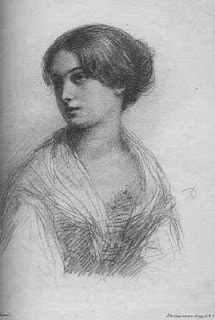 Child, were I king, I'd yield my royal rule,
My chariot, sceptre, vassal-service due,
My crown, my porphyry-basined waters cool,
My fleets, whereto the sea is but a pool,
For a glance from you!
Love, were I God, the earth and its heaving airs,
Angels, the demons abject under me,
Vast chaos with its teeming womby lairs,
Time, space, all would I give--aye, upper spheres,
For a kiss from thee!
translation by Thomas Hardy
photogravure by Goupil et Cie, from a drawing by Deveria, appears in a collection of Hugo's poetry published by Estes and Lauriat in the late 1800s.
Why is Valentine's Day on February 14th?
There is a theory that the only reason tomorrow is associated with Cupid is due to a poem Geoffrey Chaucer wrote.
by Victor Hugo,
From Les Feuilles D'Automne

My chariot, sceptre, vassal-service due,
My crown, my porphyry-basined waters cool,
My fleets, whereto the sea is but a pool,
For a glance from you!
Love, were I God, the earth and its heaving airs,
Angels, the demons abject under me,
Vast chaos with its teeming womby lairs,
Time, space, all would I give--aye, upper spheres,
For a kiss from thee!
translation by Thomas Hardy
photogravure by Goupil et Cie, from a drawing by Deveria, appears in a collection of Hugo's poetry published by Estes and Lauriat in the late 1800s.
Why is Valentine's Day on February 14th?
There is a theory that the only reason tomorrow is associated with Cupid is due to a poem Geoffrey Chaucer wrote.
In 1381, Chaucer was busy composing a poem in honor of the arranged marriage between England's Richard II and Anne of Bohemia. This was a very big deal indeed, and Chaucer was looking for just the right saint to honor on May 3, the day Richard II signed the papers of engagement to his Bohemia beauty.Why exactly is unclear, however, if you forgot, and someone is upset, perhaps you can use this information to give yourself a few extra months.
His search ended, Kelly surmises, when Chaucer learned that a Saint Valentine of Genoa had an honorary feast day on May 3. Perfect! So he wrote the poem "The Parliament of Fowls" in the couple's honor.
"The Parliament of Fowls" literally means "the meeting of birds," says Kelly. "Chaucer dreamed up the idea that all birds chose their mates on May 3rd," he says.
After Chaucer's death in 1400, Valentine's Day celebrations got pushed back to February.
Amanuensis Monday: A Patent for Improvement to Hydrants - 1898
Amanuensis: A person employed to write what another dictates or to copy what has been written by another.
I continue my project to transcribe family letters, journals, newspaper articles, audiotapes, and other historical artifacts. Not only do the documents contain genealogical information, the words breathe life into kin - some I never met - others I see a time in their life before I knew them.
I began this project three years ago, back on February 16, 2009, and this is my 157th transcription. Since I began, many others have joined in on the meme. I am thrilled that this meme I started has inspired so many to transcribe their family history documents. Why do we transcribe? I provide my three reasons in the linked post. You may find others.
I am going to use this milestone to take a break from my weekly transcriptions. It took awhile, but I am running out of things to transcribe and post. (I have no shortage of things to transcribe, but many aren't appropriate to post for one reason or another.) I also want to set aside some extra time in the week for last minute details that are bound to arise for an upcoming spring wedding, and summer honeymoon.
I suspect I will come across documents that are appropriate for Amanuensis Monday, and when I do, I will post them, but it won't be every week.
***
This week I transcribe a patent filed by my second great grandfather, Selig Feinstein and his business partner, Max Wieslman in 1898. I discovered this patent back in 2008, before I began this project. The text is stored in the patent database, with only minor OCR mistakes, but it's good to have a copy for my own records, and some family members may have started reading my blog since 2008.
I continue my project to transcribe family letters, journals, newspaper articles, audiotapes, and other historical artifacts. Not only do the documents contain genealogical information, the words breathe life into kin - some I never met - others I see a time in their life before I knew them.
I began this project three years ago, back on February 16, 2009, and this is my 157th transcription. Since I began, many others have joined in on the meme. I am thrilled that this meme I started has inspired so many to transcribe their family history documents. Why do we transcribe? I provide my three reasons in the linked post. You may find others.
I am going to use this milestone to take a break from my weekly transcriptions. It took awhile, but I am running out of things to transcribe and post. (I have no shortage of things to transcribe, but many aren't appropriate to post for one reason or another.) I also want to set aside some extra time in the week for last minute details that are bound to arise for an upcoming spring wedding, and summer honeymoon.
I suspect I will come across documents that are appropriate for Amanuensis Monday, and when I do, I will post them, but it won't be every week.
***
This week I transcribe a patent filed by my second great grandfather, Selig Feinstein and his business partner, Max Wieslman in 1898. I discovered this patent back in 2008, before I began this project. The text is stored in the patent database, with only minor OCR mistakes, but it's good to have a copy for my own records, and some family members may have started reading my blog since 2008.
Sunday, February 12, 2012
Weeks in Review
It's been a few weeks since I had a "Week in Review." Below are some highlights from news stories and blog posts I have read in the past few weeks that deal with my overlapping interests in Genealogy, History, Heritage, and Technology.
Petition to Save the SSDI
The Records Preservation and Access Committee (RPAC) has created a petition on Whitehouse.gov to protect the SSDI from elimination. The SSDI is the Social Security Death Index, and is under attack from politicians who claim it is to blame for identity theft. However, the Death Index was created to prevent identity theft. If the Social Security numbers in the index are being used for fraudulent purposes, the fault isn't the index, but that the index isn't being used by the IRS and others to check. Read the Press Release. Several bloggers have written about this, including: Dear Myrtle, Genea-Musings, and Geneabloggers.
Genealogy
The Ancestry Insider discusses FamilySearch's new product, Family Tree. While the intent is similar to Ancestry.com's OneWorldTree, it appears to allow for people to make corrections, so there may be some promise.
Technology
Bill LeFurgy at The Signal asks, Email is Where Knowledge Goes to Die, or Is It? An excerpt: "Email collections from famous people are arriving in libraries and archives. The Salman Rushdie “papers” at Emory University include the author’s email, and the British Library acquired Wendy Cope’s email as part of the poet’s archive...We can chose for our email to live on rather than die through neglect, error or mindless deletion. Given all the time and effort we put into our messaging, and the wealth of information it contains, it makes sense to think about what should be saved."
Dick Eastman at Eastman's Online Genealogy Newsletter writes on An End of an Era: Kodak to Stop Making Cameras.
Poetry
Judith Richards Shubert at Genealogy Traces has been posting some wonderful poems over the past few weeks. For example, Hardscrabble Fields.
Other Weekly Link Lists
Petition to Save the SSDI
The Records Preservation and Access Committee (RPAC) has created a petition on Whitehouse.gov to protect the SSDI from elimination. The SSDI is the Social Security Death Index, and is under attack from politicians who claim it is to blame for identity theft. However, the Death Index was created to prevent identity theft. If the Social Security numbers in the index are being used for fraudulent purposes, the fault isn't the index, but that the index isn't being used by the IRS and others to check. Read the Press Release. Several bloggers have written about this, including: Dear Myrtle, Genea-Musings, and Geneabloggers.
Genealogy
The Ancestry Insider discusses FamilySearch's new product, Family Tree. While the intent is similar to Ancestry.com's OneWorldTree, it appears to allow for people to make corrections, so there may be some promise.
Technology
Bill LeFurgy at The Signal asks, Email is Where Knowledge Goes to Die, or Is It? An excerpt: "Email collections from famous people are arriving in libraries and archives. The Salman Rushdie “papers” at Emory University include the author’s email, and the British Library acquired Wendy Cope’s email as part of the poet’s archive...We can chose for our email to live on rather than die through neglect, error or mindless deletion. Given all the time and effort we put into our messaging, and the wealth of information it contains, it makes sense to think about what should be saved."
Dick Eastman at Eastman's Online Genealogy Newsletter writes on An End of an Era: Kodak to Stop Making Cameras.
Poetry
Judith Richards Shubert at Genealogy Traces has been posting some wonderful poems over the past few weeks. For example, Hardscrabble Fields.
Other Weekly Link Lists
- Randy Seaver's Best of the Genea-Blogs at Genea-Musings
- Ruth Blair's Ruth's Recommendations at The Passionate Genealogist
- Julie Cahill Tarr's Friday Finds at GenBlog
- Megan Smolenyak Smolenyak's Genealogy Round Up at MSS's Roots World
- Diane Haddad's Genealogy News Corral Catch-up at Genealogy Insider
Monday, February 6, 2012
Amanuensis Monday: Letter from Myrtle Van Every - Feb 15, 1944
Amanuensis: A person employed to write what another dictates or to copy what has been written by another.
I continue my project to transcribe family letters, journals, newspaper articles, audiotapes, and other historical artifacts. Not only do the documents contain genealogical information, the words breathe life into kin - some I never met - others I see a time in their life before I knew them.
I began this project back in February of 2009, and since then, many others have joined in on the meme. Why do we transcribe? I provide my three reasons in the linked post. You may find others. If you participate, feel free to leave a link to your post in the comments.
***
This week I transcribe a letter my grandmother, Myrtle (Van Every) Deutsch wrote to her sister-in-law Jean (Deutsch) Kamerman on Feb 15, 1944. (Dashes indicate names of living or possibly living people)
I continue my project to transcribe family letters, journals, newspaper articles, audiotapes, and other historical artifacts. Not only do the documents contain genealogical information, the words breathe life into kin - some I never met - others I see a time in their life before I knew them.
I began this project back in February of 2009, and since then, many others have joined in on the meme. Why do we transcribe? I provide my three reasons in the linked post. You may find others. If you participate, feel free to leave a link to your post in the comments.
***
This week I transcribe a letter my grandmother, Myrtle (Van Every) Deutsch wrote to her sister-in-law Jean (Deutsch) Kamerman on Feb 15, 1944. (Dashes indicate names of living or possibly living people)
Friday, February 3, 2012
Friday "not so random" Five
It's been awhile since I had a "Friday Five" post.
I'm sure those of you who enjoy this game have hungered for a follow-up.
Names on a theme from various census databases
1. Catherine Everdeen - 1870 US Census - Downers Grove, DuPage, IL - born 1856
2. Constant Mellark - 1860 US Census - Burlington, Hartford, CT - born 1848
3. Gale Hawthorne - 1930 US Census - Lubbock, Lubbock, Texas - born 1908
4. Haymist Smith - 1920 US Census - Charleston Ward 7, Charleston, SC - born 1910
5. Preston Snow - 1870 US Census - Fancy Gap, Caroll, VA - born 1843
I'm sure those of you who enjoy this game have hungered for a follow-up.
Names on a theme from various census databases
1. Catherine Everdeen - 1870 US Census - Downers Grove, DuPage, IL - born 1856
2. Constant Mellark - 1860 US Census - Burlington, Hartford, CT - born 1848
3. Gale Hawthorne - 1930 US Census - Lubbock, Lubbock, Texas - born 1908
4. Haymist Smith - 1920 US Census - Charleston Ward 7, Charleston, SC - born 1910
5. Preston Snow - 1870 US Census - Fancy Gap, Caroll, VA - born 1843
- If I can trust the online media campaign, it's 49 days until the movie.
- I was given the trilogy to read about two weeks ago as a birthday present.
- I am on the third novel.
Thursday, February 2, 2012
Let it Gleam, or Let it Glimmer... (repost)
This was first posted on Feb 2, 2010
Some feel it is cruel, and potentially dangerous, to wake up groundhogs.
One day, in the course of that winter, the sun had come out for a while in the afternoon, but it was the second of February, that ancient Candlmas-day whose treacherous sun, the precursor of six weeks of cold, inspired Matthew Laensberg with the two lines, which have deservedly become classic:
Let it gleam or let it glimmer
The bear returns into his cave.
(Victor Hugo, Les Miserables, 1862, p. 730)Bears and groundhogs are both hibernating animals. I suspect it's a little safer to use groundhogs as official prognosticators.
THE LIEGE ALMANAC
The celebrated almanac of "Francis Moore, physician," to whose predictions thousands are accustomed to look with implicit confidence and veneration, is rivalled, on the continent, by the almanac of Liege, by "Matthew Laensberg," who there enjoys an equal degree of celebrity.
Whether the name of Laensberg is a real or an assumed nаme is a matter of great doubt...The earliest of these almanacs known to exist is of the year 1636. It bears the name of Matthew Lansbert, mathematician, and not Laensberg, as it is now written.
-- The Table Book, W. Tegg, 1827, p. 138
Some feel it is cruel, and potentially dangerous, to wake up groundhogs.
While waking groundhogs from their hibernation has become a major tradition on Feb. 2, such efforts can actually put the animals' lives at risk...If a groundhog is awakened from hibernation too early, it might not have the energy to find food and survive in cold winter temperatures.The St. Louis Zoo doesn't participate, but it's not due to groundhog health issues.
"The fact that we're not having a Groundhog Day celebration is not really a stand we're taking so much as it is that we have a really cranky groundhog who doesn't like to be woken up," St. Louis Zoo public relations director Janet Powell told the Tribune. [same link as above]More on the Candlemas origins of the holiday.
Wednesday, February 1, 2012

Tuesday, January 31, 2012
Fifth Annual iGene Awards

The TransylvanianDutch chapter of the Academy of Genealogy and Family History has participated in all prior years, and will do so again. For those who are nostalgic, here were our selections in 2011, 2010, 2009, and 2008 from the prior year's posts.
With no further ado, we will open the envelopes for 2012
Best Picture
For Best Picture, the winner is: March 22nd, 2011 (which was posted on the 23rd)
The rules define this as a photograph, but a video is made up of a series of stills. And some videos this is more true of than others. We know the winning video has very little to do (directly) with our family history, past or future, however, other aspects of this post swayed us in our selection.
Runner Up:
Wordless Wednesday - Tel Aviv hotels, and postage stamps - 1944 was also nominated. This post contained scanned images of several Tel Aviv business cards and postage stamps from the 1940s. The war-time souvenirs were from my maternal grandfather's collection.
Best Screen Play (story you would make into a movie including the cast)
For Best Screen Play, the winner is: Dawes Commission Testimony
Readers may point out that some of these posts were prior to 2011, however, it seems appropriate that the series of posts win an award for the year of completion. I've indicated the year of each post below, and five of them were in 2011.
Dawes Commission Testimony - Samuel T Hartley - Nov 21, 1900 (2009)
Dawes Commission Testimony - Robert Hartley - Nov 21, 1900 (2011)
Dawes Commission Testimony - Virginia Hartley Shultz - Nov 21, 1900 (2011)
Dawes Commission Testimony - Sophronia Hartley Cagle - Nov 21, 1900 (2011)
Dawes Commission Testimony - Melvin Elijah Van Every – Nov 21, 1900 (2009)
Dawes Commission Testimony - Samuel W Denyer - Nov 21, 1900 (2011)
Dawes Commission Testimony - Caroline Hartley Taylor - Nov 26, 1900 (2011)
Dawes Commission Testimony - Eliza Caroline Foster Reeves – Nov 26, 1900 (2009)
Dawes Commission Testimony - Georgia Hartley Phillips – June 17, 1902 (2009)
Dawes Commission Testimony - Samuel T Hartley – June 17, 1902 (2009)
The Dawes Commission Decision - July 11, 1902 (2010)
Casting: The Dawes Commission judges made a point that none of those testifying 'looked Choctaw." However, I have no photographs of any of them, except my great grandfather, Melvin Elijah Van Every.
My first choice for casting Samuel T Hartley will be Morgan Freeman. My second choice will be Leonard Nimoy. My third choice will be Kirk Douglas. None of them appear Choctaw, so they fit the requirements. (How Samuel T Hartley, who fought for the Confederacy, would feel about some of those casting suggestions doesn't matter to me. He's not my ancestor.)
For Samuel's four daughters: Sophronia, Virginia, Georgia, and Caroline, I'd like to cast Drew Barrymore, Natalie Portman, Mayim Bialik, and Soleil Moon Frye. Don't ask me why, but I think they'd make excellent sisters.
Perhaps Leo DiCaprio could play the role of my great grandfather, and Macaulay Culkin could be Robert Hartley. Jewel Staite can complete the main cast members as Eliza Foster Reeves.
Best Documentary (investigative research)
For Best Documentary, the winner is: Civilian Occupation Codes: What's Going On?
This series of posts began with the discovery that Ancestry had changed the occupation for my great uncle on his Army Enlistment record, sometime after 2007 when I first obtained the record. I conducted some research, and realized several other members of my family had had their occupations changed. I identified the cause: Two different lists of Occupation Codes. In my final post, I linked to the report from the National Archives indicating that the original Occupation Codes were in error. It was dated in 2005, two years prior to when I initially obtained the records from Ancestry. I still don't know when Ancestry updated their records.
Runner-up
Also receiving a nomination is: 1942 Tax Returns - a post where I looked at my grandparents' tax returns and calculated how salaries, and deductions compared to today.
Best Biography
The winner for Best Biography goes to:
Judson Van Every - Manchester Journal - 1902 - 1910 and Judson Van Every - Manchester Journal - 1915-1917.
These two posts contained newspaper clippings from the Manchester Journal (OK) concerning my great grandfather's brother, Judson Van Every. The clippings reveal a lot about the 15 years of his life.
Best Comedy
The winner for Best Comedy is: Missouri Sheriff has a Mule Problem - the St. Louis Post Dispatch had a little fun at the expense of Sheriff Louis P. Gober of Scott County, Missouri (my fiancee's second great grandfather)
Runner-Up:
Also receiving a nomination was a poem I wrote: Genealogy Research
This ends the awards for the five main categories. However, in 2010 and 2011 I added a category where I present awards to show my gratitude to other Genea-Bloggers who commented upon, or in some other way responded to an entry, providing me with more information on my family.Geneabloggers in a Supporting Role
This year this award goes to a blogger whose post spurred me to conduct some research for which I am grateful.
Philip of Blood and Frogs back in April posted a primer on finding and ordering US Naturalization Records. While I already had the Declarations of Intent for most of my immigrant ancestors who arrived recently enough, I realized there were several other documents of which the National Archives might have copies. The process led to the Naturalization Petition for Salomon Deutsch - my great grandfather - and the first name of his first daughter who remained in Transylvania, and likely died in the Holocaust. The process also led to the Naturalization Petition for Barnet Newmark - another great grandfather - and a date for his arrival in St. Louis.
Thus concludes the Fifth Annual iGene Awards - TransylvanianDutch Chapter
Monday, January 30, 2012
Amanuensis Monday: Death Record for Andrew Van Every (1798-1873)
Amanuensis: A person employed to write what another dictates or to copy what has been written by another.
I continue my project to transcribe family letters, journals, newspaper articles, audiotapes, and other historical artifacts. Not only do the documents contain genealogical information, the words breathe life into kin - some I never met - others I see a time in their life before I knew them.
I began this project back in February of 2009, and since then, many others have joined in on the meme. Why do we transcribe? I provide my three reasons in the linked post. You may find others. If you participate, feel free to leave a link to your post in the comments.
***
This week I transcribe the death record of my 3rd great grandfather, Andrew Van Every (1798-1873)
I continue my project to transcribe family letters, journals, newspaper articles, audiotapes, and other historical artifacts. Not only do the documents contain genealogical information, the words breathe life into kin - some I never met - others I see a time in their life before I knew them.
I began this project back in February of 2009, and since then, many others have joined in on the meme. Why do we transcribe? I provide my three reasons in the linked post. You may find others. If you participate, feel free to leave a link to your post in the comments.
***
This week I transcribe the death record of my 3rd great grandfather, Andrew Van Every (1798-1873)
Monday, January 23, 2012
Amanuensis Monday: Company Muster Roll - Ebenezer Denyer - Jan & Feb 1863
Amanuensis: A person employed to write what another dictates or to copy what has been written by another.
I continue my project to transcribe family letters, journals, newspaper articles, audiotapes, and other historical artifacts. Not only do the documents contain genealogical information, the words breathe life into kin - some I never met - others I see a time in their life before I knew them.
I began this project back in February of 2009, and since then, many others have joined in on the meme. Why do we transcribe? I provide my three reasons in the linked post. You may find others. If you participate, feel free to leave a link to your post in the comments.
***
This week I transcribe a transcription from a Confederate Company Muster Roll for my second great grandfather, Ebenezer Denyer (1828-1872)
I continue my project to transcribe family letters, journals, newspaper articles, audiotapes, and other historical artifacts. Not only do the documents contain genealogical information, the words breathe life into kin - some I never met - others I see a time in their life before I knew them.
I began this project back in February of 2009, and since then, many others have joined in on the meme. Why do we transcribe? I provide my three reasons in the linked post. You may find others. If you participate, feel free to leave a link to your post in the comments.
***
This week I transcribe a transcription from a Confederate Company Muster Roll for my second great grandfather, Ebenezer Denyer (1828-1872)
Monday, January 16, 2012
Amanuensis Monday: London Dreyfus Demonstrations - Sept 1899
Amanuensis: A person employed to write what another dictates or to copy what has been written by another.
I continue my project to transcribe family letters, journals, newspaper articles, audiotapes, and other historical artifacts. Not only do the documents contain genealogical information, the words breathe life into kin - some I never met - others I see a time in their life before I knew them.
I began this project back in February of 2009, and since then, many others have joined in on the meme. Why do we transcribe? I provide my three reasons in the linked post. You may find others. If you participate, feel free to leave a link to your post in the comments.
***
This week I transcribe a New York Times article from September 15, 1899 concerning demonstrations in London. My Newmark ancestors were in London at the time, but I don't know if they were present at the demonstrations.
I continue my project to transcribe family letters, journals, newspaper articles, audiotapes, and other historical artifacts. Not only do the documents contain genealogical information, the words breathe life into kin - some I never met - others I see a time in their life before I knew them.
I began this project back in February of 2009, and since then, many others have joined in on the meme. Why do we transcribe? I provide my three reasons in the linked post. You may find others. If you participate, feel free to leave a link to your post in the comments.
***
This week I transcribe a New York Times article from September 15, 1899 concerning demonstrations in London. My Newmark ancestors were in London at the time, but I don't know if they were present at the demonstrations.
Subscribe to:
Posts (Atom)


 Posts
Posts