Friday, March 15, 2013

Group Photographs

I recommended the photo for this week's Sepia Saturday prompt. It comes from the Harry Truman Library - and I found it browsing through the Missouri Digital Heritage website. It's an unusual group photo. Most group photos are from the front, but here we get to see everyone's backs, as they pose for a more traditional photograph in front of the press. The photograph was taken on July 17, 1945, the day after the atom bomb was tested in New Mexico. Truman had written on the back of the photograph, "This is the place I told Stalin about the Atom bomb, which was exploded July 16, 1945 in New Mexico. He didn't realize what I was talking about! HST"

I've shared a few large group photos here in the past.

This group photo of the St. Louis Post Office Inspectors and Office Force from 1935 came with a caption identifying everyone, which I transcribed here. Both of my maternal grandparents are in the photo.


This photograph, unfortunately, had no such caption. It's the 1924 Confirmation Class for B'nai El Temple. The youth in the front row, second from the right, with a thin white box drawn around him is my paternal grandfather, Melvin Newmark, age 12.


Here, however, is a photograph I haven't shared. The National Beekeepers Association meeting from 1906. I found this in Gleanings in Bee Culture, Volume 35, 1907, pp. 34-35.


The images can be enlarged, or one can follow the link for an ever larger look. Everyone was given a piece of paper with a number on it to hold, and the caption below identifies everyone by number. Unfortunately, #83, "E. Van Every," didn't make certain the piece of paper was visible to the camera, so I am uncertain who showed up to represent the Van Every family.

Either the caption is in error, and it should read "M.E. Van Every" for my great grandfather, Melvin Elijah. Or his fourteen year old daughter, Evelyn/Evva, represented the family. There are some young women in the photo, so it's possible. I've sent the photograph to some cousins, but haven't yet received any positive or negative identification. I do have a photograph of Melvin, shown below with his wife, Margaret. I don't see a clear match for him in the group above.


Thursday, March 14, 2013

Google Reader Alternatives: First Glance

I've begun looking at various alternate RSS Feed Readers recommended by various Tech sites, such as Macgasm, LifeHacker, and CNET.

Feedly: Has different apps for iOS, Android, Safari, Chrome, and Firefox. No version for Internet Explorer. I don't like Internet Explorer, but I am restricted to using it at work. I wouldn’t be able to catch up on blog posts during my lunch hour. (Well…sure I could…on my phone. But it’s easier to read blog posts on a large screen.)

NewsBlur: When I first looked at NewsBlur the evening of March 13th, it said that its free version had a limit of 64 feeds. By March 14th, that number had decreased to 12. The decrease could be temporary, there is no information on their blog. Regardless, that's too low for me. Their premium version is only $12/year.  If there were no other viable choices, I’d consider it. But with worthwhile free options, paying even $12/year is too much.

TheOldReader: Created when Google Reader made some changes that upset some users, it was constructed to look and feel exactly like Google Reader. Currently, due to server overload, they are limiting the number of users who can import their feeds at one time, so I haven’t had a chance to really test this out, but it looks promising. Especially for users who don’t like getting used to new things. Update: Was able to upload my subscription file the evening of March 14th, but received a message that it could be several hours before the subscriptions were imported, as 5482 users were in the import queue ahead of me.

Google Currents: Only has iOS and Android versions. If you only follow your subscriptions on a phone or tablet, this might be a good alternative. Until Google decides it no longer wishes to maintain it either.

NetVibes: The only place so far I have been able to import my Google Reader feeds. Their interface is more complicated than Google Reader. They have two views: Reader and Widget. Reader is similar to Google Reader, though I haven't figured out the best way to bookmark articles to return to them. Widget view allows you to add additional functionality similar to an iGoogle page. (iGoogle is being retired in November of 2013)

Pulse: This seems to be one of the more popular 'visual' readers. For those who like to view their blogs in a newspaper/magazine style. It is my opinion the more blogs one subscribes to, the less useful this becomes. It was announced yesterday that LinkedIn is close to buying Pulse. Not sure how that will impact the application (or the networking site).

Currently, my plan is to test out NetVibes and TheOldReader and decide which one I prefer. If someone suggests I try something not listed above, I'll consider it.

Another factor some might be wondering about is how likely are the above websites to be around a year from now? I have no ability to measure that for any of the options above. Especially not Google Currents. Google Reader has been in existence since 2005, but Google has been doing a lot of 'spring cleaning' recently, and making it clear they are willing to abandon applications they view as unsuccessful. (And many people would not have included Google Reader in that list.)

Wednesday, March 13, 2013

Survey Update: Possible Bad News for 70% of My Readers

Five days ago I posted a simple survey, asking my readers how they followed the posts on my blog.


70% of the current votes are going towards using an RSS reader, such as Google Reader.

While there are multiple RSS readers, Google Reader is one of the more popular ones.
According to Google Reader's statistics, over 100 people are subscribers to this blog.

As popular as it is, today Google announced it is retiring it.
As of July 1st, 2013, Google Reader will no longer exist.

I am a user of Google Reader myself, and would appreciate suggestions on other Readers to try.

Lifehacker provides some suggestions

Sunday, March 10, 2013

Weekly Genealogy Picks: March 3 to 9

Highlights from news stories and blog posts I have read in the past week that deal with my overlapping interests in Genealogy, History, Heritage, and Technology.
Poetry
Devolution

(sorry, couldn't resist)

Other Weekly Lists
Upcoming holidays - religious and secular, national and international - for the next two weeks

Two Week Calendar
  • March 10 - Meatfare Sunday (Orthodox Christian)
  • March 10 - Maha Shivaratri (Hindu)
  • March 11 - Johnny Appleseed Day
  • March 11 - Commonwealth Day (Commonwealth of Nations)
  • March 12 - World Day Against Cyber Censorship
  • March 13 - L. Ron Hubbard's Birthday (Scientology)
  • March 14 - Pi Day (3.14)
  • March 15 - International Day Against Police Brutality
  • March 15 - Ides of March
  • March 16 - Bacchanalia (Ancient Rome) [March 16-17]
  • March 17 - St. Patrick's Day
  • March 17 - Cheesefare Sunday (Orthodox Christian)
  • March 18 - Lent Begins (Orthodox Christian)
  • March 19 - Saint Joseph's Day (Christian)
  • March 20 - Ostara (northern hemisphere) Mabon (southern hemisphere) (Pagan)
  • March 21 - New Year (Baha'i)
  • March 21 - New Year (Persian/Zoroastrian)
  • March 24 - Palm Sunday (Christian)
  • March 24 - Orthodox Sunday (Orthodox Christian)
Survey

For those who may not have seen my earlier post, I am conducting a survey to see how readers are following my blog posts. I am also curious if there are any other places you would like to be able to read my posts. If so, leave a comment.

Saturday, March 9, 2013

Making Sense About Making Sense

Image Source: Office of Biological and Environmental Research 
of the U.S. Department of Energy Office of Science.
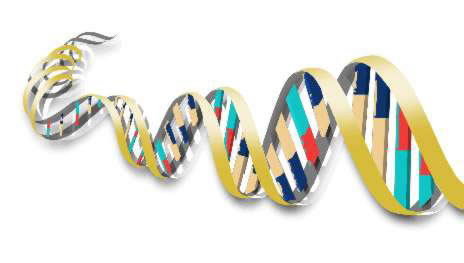
Sense about Science, a British charitable trust, has released a report entitled, Sense About Genetic Ancestry. The entire report is available as a free PDF download. Already several newspapers, such as the Telegraph, are stating that the report indicates DNA Tests are Meaningless. This is because the scientists refer to DNA testing as 'genetic astrology,' even though they are careful to say:
      "There are credible ways to use the genetic data from mtDNA or Y chromosomes in individual ancestry testing, such as to supplement independent, historical studies of genealogy. If, for example, two men have identified – through historical research, possibly involving surnames – a common maleline ancestor in the sixteenth century, it would be reasonable to use their Y chromosome data to test this. There are some ancestry testing companies that offer this service.  
      To answer a specific question about individual ancestry with any degree of confidence requires a combination of historical records and genetic information."
    No genealogist is going to dispute that advice, but there is no credible scientific way to use astrology, which is where their metaphor breaks down, and leads to bad media reporting. It could be argued the language of the report is as sensationalistic as the language of the DNA companies which the scientists are complaining about.

    The points the scientists raise are good ones. There probably are people taking the DNA tests without conducting historical record research, thinking the DNA test is all they need to do. And the report is meant for them, not for the genealogist who is taking the test with their eyes wide open about what the tests mean, and don't mean.

    If you're unsure what the tests means, read the report. I'm no expert, but I have read a lot about DNA testing, and I don't think I disagree with any of their premises, though I do find fault with some of the conclusions.

    Friday, March 8, 2013

    A survey: How do you read my blog?

    I have tried to make this blog accessible in a variety of places. However, I thought I would post a survey to see which of these places are currently the most popular.

    Also, if there is a place not listed below, where you would like to be able to access my blog posts, let me know in the comments.

    Water, Water, Every Where

    The prompt for this week's Sepia Saturday contains, among other things, a body of water. So I thought I would share some photographs in my collection involving oceans and lakes. Some of these I have shared previously, others are new to this blog
    Here's a photograph of my four paternal great-grandparents, on a vacation together. They were good friends prior to their children getting married. Barney and Bertha (Cruvant) Newmark are on the left, and Herman and Annie (Blatt) Feinstein are on the right. The year was 1947, they were in Miami, FL, and family lore states that while the Feinstein surname caused them enough difficulties with the area hotels in that year, as the vacation progressed, and my great grandfather's tan grew darker and darker, their difficulties are said to have grown.
    Here's some photographs of the children of the above four, ten years earlier in 1937. My paternal grandparents Melvin and Sissie (Feinstein) Newmark. They are on their honeymoon in the Lake of the Ozarks, Missouri.
    Here are my maternal grandparents, also on their honeymoon in 1937. Martin and Myrtle (Van Every) Deutsch. The water isn't visible in this photograph, though it is clear they are on a boat. They are in Mexico.

    The beginning of the phrase on the boat reads: "Soy del nino" which translates to "I am the child." I can't read the rest.
    And finally, here is a photograph of my wife and me last year, on our honeymoon.


    Thursday, March 7, 2013

    Selected Posts

    I have been blogging genealogy for six years. Many readers likely haven't been reading the blog consistently from the start. I decided to create a page with an index of Selected Posts. A glimpse into the past for those who wonder what they might have missed. A link to the page now exists in the upper right hand corner of the blog, underneath the banner.

    Monday, March 4, 2013

    The Government isn't a Ministry of Magic

    The process of genealogical research involves searching for information, evaluating the reliability of that information, comparing it to other bits of information one finds, and resolving conflicts.

    At times I feel some individuals place too much faith in the reliability of some documents.

    Particularly governmental documents.

    For example:

    There are cases where individuals were never, or almost never, referred to by the name on their birth certificate. There are genealogists who will insist that the name of this ancestor is what appeared on the birth certificate, as if a piece of paper with a government’s stamp magically overrides the name everyone who ever mattered to the individual called them.

    My maternal grandfather had a brother named Allen. Allen’s 1914 birth certificate clearly states “Adolph.” The name ‘Adolph’ even appears on his father’s 1921 naturalization records. However, early census records indicate the given name quickly changed to “Albert” and then “Allen.” No one probably ever referred to him as Adolph after the age of 10. He may have been Adolph at birth, but his name quickly changed. No “Change of Name” certificate had to be filed with the government for this to be the case. The government doesn’t have magical control over our names.

    In the above case, I argue, the government isn't right. But the government can also be wrong. (There is a difference between not-right, and wrong.)

    If you were asked to identify what US Time Zone a specific state resided in, what would you consider the Primary Source of information? The US Legal Code on time zones, correct?

    Below are quotes from the 1997 version of the code, linked to above.

    Sec. 263. Designation of zone standard times

    The standard time of the first zone shall be known and designated as Atlantic standard time; that of the second zone shall be known and designated as eastern standard time; that of the third zone shall be known and designated as central standard time; that of the fourth zone shall be known and designated as mountain standard time; that of the fifth zone shall be known and designated as Pacific standard time; that of the sixth zone shall be known and designated as Alaska standard time; that of the seventh zone shall be known and designated as Hawaii-Aleutian standard time; and that of the eighth zone shall be known and designated as Samoa standard time.

    There’s also a specific section of the US Code referencing Idaho, which is split between two time zones.

    Sec. 264. Part of Idaho in third zone

    In the division of territory, and in the definition of the limits of each zone, as provided in sections 261 to 264 of this title, so much of the State of Idaho as lies south of the Salmon River, traversing the State from east to west near forty-five degree thirty minutes latitude, shall be embraced in the third zone: Provided, That common carriers within such portion of the State of Idaho may conduct their operations on Pacific time.

    Reading Sec. 263 and 264 together, what is the logical conclusion about the State of Idaho?

    Clearly: Part of Idaho is in the third zone, and the third zone is the Central zone. So, the part of Idaho that isn't in the Pacific zone, is in the Central zone.

    That is, if you held the US Legal Code as a magically irrefutable document between 1966 and 2007.

    In 1966, sec. 263 was changed to add the Atlantic zone as the first zone, and all other zones were renumbered. Section 264 wasn’t changed until 2007. So part of Idaho was in the central zone for 41 years. If you went by the legal code.

    I would like to think this 2006 post of mine on my personal blog had some influence on the government's delayed action.

    Sunday, March 3, 2013

    Weekly Genealogy Picks: Feb 24-March 2

    Highlights from news stories and blog posts I have read in the past week that deal with my overlapping interests in Genealogy, History, Heritage, and Technology.


    Source: Wondermark - used with permission
    Other Weekly Lists
    Upcoming holidays - religious and secular, national and international - for the next two weeks

    Two Week Calendar
    • March 8 - International Women's Day (Eastern Europe, Russia, former Soviet Bloc)
    • March 10 - Meatfare Sunday (Orthodox Christian)
    • March 10 - Maha Shivaratri (Hindu)
    • March 11 - Johnny Appleseed Day
    • March 11 - Commonwealth Day (Commonwealth of Nations)
    • March 12 - World Day Against Cyber Censorship
    • March 13 - L. Ron Hubbard's Birthday (Scientology)
    • March 14 - Pi Day (3.14)
    • March 15 - International Day Against Police Brutality
    • March 15 - Ides of March
    • March 16 - Bacchanalia (Ancient Rome) [March 16-17]
    • March 17 - St. Patrick's Day
    • March 17 - Cheesefare Sunday (Orthodox Christian)

    Friday, March 1, 2013

    Data Backup Day: Have You Made Copies?

    The first of every month is Data Backup Day.

    Be certain to make copies of those precious documents.

    Image Source: Two Sleeping Children, Peter Paul Rubens, 1612-1613

    Wednesday, February 27, 2013

    Wordless Wednesday: My Great-Grandfather's Honey Wagon

    Melvin Van Every, his honey wagon, and an unidentified girl, likely a daughter. Unfortunately, the photograph isn't clear enough to identify which one. Melvin's youngest daughter was 17 when they moved to El Paso, so this picture was likely taken in Caldwell County Texas.

    I believe the photograph was from the collection of Myrtle Amatee Van Every Carleston (1877-1966), Melvin's sister. I received the photograph from a cousin, and I'm sharing it with her permission.

    Sunday, February 24, 2013

    Weekly Genealogy Picks: Feb 17-23

    Highlights from news stories and blog posts I have read in the past week that deal with my overlapping interests in Genealogy, History, Heritage, and Technology.

    Research Tips
    • Philip Trauring at Blood and Frogs reports that JRI-Poland and The Polish Archives have officially signed the agreement that was announced as upcoming back in January. The details of the agreement are exciting, and I look forward to the simplifying of the record ordering process, and all the digitization.
    Poetry
    Technology, and Blogging
    • Ryan North of Dinosaur Comics humorously points out a serious problem with the speed of advancing technology.  If we can predict we won't be using a single piece of software in 10 years that we are using today, how do we preserve data?

    Other Weekly Lists
    Upcoming holidays - religious and secular, national and international - for the next two weeks

    Two Week Calendar
    • Feb 26 - Intercalary Days (Baha'i) [Feb 26-March 1]
    • Feb 26 - Savior's Day (Nation of Islam)
    • Feb 28 - Rare Disease Day
    • March 1 - Ancient Roman New Year
    • March 1 - National Pig Day (US)
    • March 2 - Nineteen Day Fast (Baha'i) [March 2-20]
    • March 8 - International Women's Day (Eastern Europe, Russia, former Soviet Bloc)
    • March 10 - Meatfare Sunday (Orthodox Christian)
    • March 10 - Maha Shivaratri (Hindu)

    Friday, February 22, 2013

    Free Art for Your Blog

    One way to enliven a blog entry is with photography or artwork. Many entries on a genealogy blog will obviously be illustrated by photographs from family collections. However, sometimes we write about things for which we don't have photographs. Some bloggers are handy with a camera, or the sketchpad, but others aren’t. Those of us who find our creativity restricted to the palette of words in the dictionary soon find ourselves wondering where we can find free photography and art.

    Sure, you can go to Google Images, search for keywords, download, and then use the images you find. However, while possibly tempting, most bloggers realize there are legal issues with doing this. Furthermore, we don’t want people copying and pasting our words on their websites without our permission; therefore we should show the same respect to photographers and artists.

    However, there is a lot available that is free (or almost free) of copyright restrictions. Below are five good resources; there are undoubtedly others. Those with suggestions should include them in a comment to the post.

    I. Flickr

    A. The Commons
    Flickr, the photo-sharing website, has a section they call The Commons. The Commons began in January of 2008 when The Library of Congress released about 1500 photographs from their collection to display on Flickr. Since then, The Library of Congress Flickr collection has grown to over 17,000 photographs. Several other libraries and museums have added photographs from their collections. If you search The Commons any photographs you find will be completely free of copyright restrictions. If you follow a link to the museum’s full collection on Flickr, leaving The Commons, some of those photographs may have copyright restrictions. The description of the photograph should indicate whether or not there are any restrictions.

    [Note: The 1860s image on the left of the
    Jefferson Barracks military post just South of St. Louis, Missouri came from the New York Public Library collection at The Commons.]

    B. Creative Commons

    Flickr also has a section entitled Creative Commons

    Anyone is able to contribute photographs to this section. These photographs aren’t completely free of copyright restrictions, but they fall into the “almost free” category. There are six groups, each with a different combination of four requirements

    Attribution: The simplest, this means to use the photograph or artwork you must provide credit. An easy way to do this is to provide a link to the individual Flickr account from which the work came.

    No Derivatives: You can display the artwork or photography exactly as it appears; you can’t make any changes. (Changing the size of the photograph, as well as trimming a ‘detail’ are both derivative works. Even copying the image in photo-editing software, pasting it into a new file, and adding a caption in whitespace underneath, is still a derivative work. The image you download from Flickr must be the exact same file you upload to your website.)

    Non Commercial: – You can’t use the work for commercial purposes. (While many people will think ‘commercial’ means putting the photo on the cover of your CD, or on a tshirt you sell on CafePress – if your blog has advertisements from which you make money, a court could decide your blog is commercial. Since you probably don't wish to upset the artist, I would recommend asking permission from the owner – as they should be easily contactable from their Flickr accounts.)

    ShareAlike: ShareAlike means if you make a derivative work, you must distribute it under a similar Creative Commons license

    With those four definitions in mind, here are the six Creative Commons categories at Flickr, each of which can be searched individually:

    1) Attribution License: Only attribution is required. You can make derivatives, use it for commercial purposes, etc. Once you make changes to the work, you can redistribute your derived work under a different set of requirements.

    2) Attribution No Derivs License: You must give credit, and you aren’t allowed to make any derivatives. But as long as you don't make any changes to the work, you can still use it for commercial purposes.

    3) Attribution – Non Commercial – No Derivs License: The most restrictive of the categories, the photographs are still free to use on a personal, non-commercial site.

    4) Attribution – Non Commercial: Derivatives are allowed.

    5) Attribution – NonCommercial – ShareAlike: If you make a derivative work, you must distribute it under a similar Creative Commons license

    6) Attribution – ShareAlike: Same as #5, but you may use for commercial purposes.

    II. LIFE Magazine

    LIFE Magazine is sharing a large portion of their historical photo collection on Google Images .

    They have the images organized by decade, and images from the 1880s through the 1910s are free of copyright restrictions. Those in the 1920 category and later are restricted to “Personal – non-commercial usage.”

    III. The US Government

    The US Government has an index of the images available on all their websites:
    Most of these images and graphics are available for use in the public domain, and they may be used and reproduced without permission or fee. However, some images may be protected by license. We strongly recommend you thoroughly read the disclaimers on each site before use. For information about obtaining seals of Federal Agencies and the United States, please see the Government Printing Office website.

    Images range from insects on the US Department of Agriculture website, photographs of the Grand Canyon on the National Park Service website, to images of the lunar surface on the NASA website.

    IV. Classic works of art are a great way to illustrate your entries.

    Art History Resources on the Web
    is a handy index to websites where you can find classic works of art that are free of copyright restriction.

    Note: While artwork might be in the ‘public domain’ the photographs of the artwork might not be. If the image is the painting only, and you don’t see the frame, or the museum wall behind it, one photograph is going to be nearly identical to any other photograph, so it can be safely assumed to be in the public domain. However, once the creativity of the photographer enters into the photograph, you are on rockier grounds. And if the work of art is a sculpture, the photographer will often matter.

    V. Pixabay

    Pixabay is a relatively new entry into sources for free photography and artwork, but they look extremely promising. Quoting from their Terms,
    "Images on Pixabay are bound to Creative Commons Deed CC0. To the extent possible under law, uploaders of Pixabay have waived all copyright and related or neighboring rights to these Images. You are free to adapt and use the Images for commercial purposes without attributing the original author or source. Although absolutely not required, a link back to Pixabay would be nice."
    There are a handful of limitations. For example: if there's a person in the image, you might need to get a 'model release' from that person to use it for commercial purposes. If there is a company trademark in the photo, you might need to get permission from that company for commercial usage. They also state you can't use the images for "unlawful or immoral purposes." The latter is somewhat difficult to define globally. What one person, locality, state, or country considers immoral, another might not. Though one immoral purpose specifically mentioned is pornography. There are other limitations mentioned in their terms, which should be read.

    As one might expect, there are a lot of cat images at Pixabay
    [source]
    While they state you don't need to attribute your source, some bloggers may decide it is safer to do so. Anybody can set up an account at Pixabay, and start uploading photographs. Pixabay states that they attempt to screen the uploads, but there is no guarantee they are 100% successful. By linking to the image source on Pixabay, if the image was inappropriately uploaded, the original rights holder will know who to hold responsible. Here's Pixabay's recent response when asked what one should do if an original rights holder files a complaint.

    Note: Pixabay has an agreement with Shutterstock. All search results will start with a handful of images that link to the Shutterstock website. Those images aren't free, but they are very easy to scroll past.

    There are websites that will sell you the rights to photography, such as ShutterstockiStockPhoto, or Getty Images . However, since there are several places to find free images, unless there is a particular image at one of these sites that really strike your fancy, there is no need to use them.

    With all these sources for free photography and artwork, when you don't have a photograph from your family collection for a blog entry, your entry doesn't need to be image-free.

    This article is revised and updated from a 2009 post.

    Sunday, February 17, 2013

    Weekly Genealogy Picks: Feb 10-16


    Highlights from news stories and blog posts I have read in the past week that deal with my overlapping interests in Genealogy, History, Heritage, and Technology.

    Research Tips
    Photographs
    Poetry
    Other Weekly Lists
    Upcoming holidays - religious and secular, national and international - for the next two weeks

    Two Week Calendar
    • Feb 18 - George Washington's Birthday (US) [Federal holiday]
    • Feb 20 - World Day of Social Justice (International)
    • Feb 21 - International Mother Language Day
    • Feb 23 - Purim (Jewish) [Sunset Feb 23 - Sunset Feb 24]
    • Feb 26 - Intercalary Days (Baha'i) [Feb 26-March 1]
    • Feb 26 - Savior's Day (Nation of Islam)
    • Feb 28 - Rare Disease Day
    • March 1 - Ancient Roman New Year
    • March 1 - National Pig Day (US)
    • March 2 - Nineteen Day Fast (Baha'i) [March 2-20]

    Thursday, February 14, 2013

    CAPTCHA Cha-Cha

    CAPTCHA is an ancronym for Completely Automated Public Turing test to tell Computers and Humans Apart

    A Turing Test - named after Alan Turing - is a test of a machine's ability to simulate a human. A test to tell computers and humans apart.

    [Obviously, the CHA part of the acronym is redundant and repetitive. Apparently those who coined the term wanted to add half of a dance step to it.]

    Some people refer to a CAPTCHA as a "Reverse Turing test," since it is a computer program providing a test to a human (or another computer program). You're probably very familiar with CAPTCHAs. And you probably hate them.


    Above is the CAPTCHA form you will find on blogs using the Blogger software. Often they are a lot more difficult to read than the sample above. I have been blogging since 2002, and up until November of 2012 I avoided installing a CAPTCHA. Here's a 2005 post on my non-genealogy blog explaining my anathema. (At that time I used a blogging system called MovableType. A week later I switched to Blogger. In February of 2006 I switched to WordPress. When I created this separate genealogy blog, though, I chose Blogger. MovableType still exists, maybe someday I will experiment with it again. Or try something else.)

    Where was I? In November of 2012, on this blog, I was getting enough spam in my moderation queue on a daily basis I felt it was taking too much time to delete it all. I discovered Blogger's CAPTCHA had an audio option for the visually impaired, overcoming one of my major complaints about CAPTCHA in 2005. So I added the CAPTCHA, and that solved the problem instantly. For me. I'm sure it created problems for some of my readers. Most of you were kind enough not to say anything. (I do have an email address posted, even if you found yourself unable to leave comments.) However, I have received some comments recently almost begging me to remove the CAPTCHA.

    I decided to test removing it, and see how much spam I received. November might have been a temporary fluke. For a few days the CAPTCHA hasn't been there. I have been getting some spam, but not nearly as much as I was getting in November. I can handle it at this level.

    Some other bloggers recommended to me that I remove the "Anonymous" option in my comments. It is true that all the spam I receive in my moderation queue was/is anonymous (Back in November, and Today). However, I feel the Anonymous option is essential, at least for me.

    Here is what the "Choose an Identity" portion of my blog's comment screen appears like currently:
    For someone who doesn't own a Google Account, and has no clue what OpenID even means, much less how to use it, the only two choices are Name/URL and Anonymous.  If I could, I would remove just the Anonymous option. But on Blogger, removing "Anonymous" also removes "Name/URL."

    Leaving:
    There are many many many internet users who would look at that, scratch their head in consternation, and probably curse a little. CAPTCHAs might be irritating, but in my estimation this would result in greater confusion and annoyance. I want to scare away as few distant cousins as possible.

    So What Happens if Your Spam Increases Again?
    Will the CAPTCHA return?
    Maybe not.

    I've been investigating several other options.

    1) Leave Blogger

    WordPress allows for a lot greater flexibility in Spam Control. Their Akismet plug-in is exceptionally good at catching spam. I'm surprised Blogger isn't as good, as Google's Gmail is also exceptional. If the Akismet plug-in started to fail, there are some plug-ins with significantly more benign CAPTCHAs. Honeypots and Checkboxes are my current favorites.

    A Honeypot Captcha inserts an invisible input box into the comment form; that is, it is invisible to humans. The spambots will see the box, and fill it in. The biggest problem with honeypots is that many people use automatic scripts on their browsers to fill in forms. Those scripts see the honeypots too.

    Checkboxes, as the name suggests, inserts a simple checkbox asking if you're human. The spambots aren't (currently) expecting this. I suspect as checkbox CAPTCHAs become more common, the spambots will become smarter.

    I prefer Blogger's user interface, but this is a possibility. There are other blogging systems I might investigate. My website host offers easy installation of either B2Evolution or Nucleus - neither of which I am familiar with. I'd appreciate insight from anyone who has used either of them. 

    2) Install Disqus or IntenseDebate

    I've heard that both of these comment systems can be installed on Blogger, and both have greater means of spam control. I would appreciate any insight from those who have used either of them, from the perspective of either blogger or commenter. I don't receive a lot of comments on my posts, so my main reason for using these would be spam control.

    3) Install a completely separate comment script on my website, and link to it from my blog. There are lots of options here. I have a very simple guestbook/messageboard on another site that is completely spam-free. This would allow those who can't navigate the CAPTCHA to leave a visible comment for me.
     
    Whatever I do, I will always provide some means for people to leave comments, and I will try to make it as user friendly as possible.
     
    If anyone has any thoughts on this topic, please feel free to share them in the comments.

    Clockwise: How does one define that word?

    This post has very little to do with genealogy. However, readers may still find it interesting.
    As everyone learns when they are young, "clockwise," refers to the direction the hands of a clock turn.

    But what if the direction the hands of the clock turn depended upon the clock? I'm not referencing the novelty wristwatches marketed by Disney with pitcures of Goofy on them. They are intentionally 'goofy.'

    As some may recall, back in July of last year I blogged about a clock tower in Prague, at the Jewish community center next to the Altneu Synagogue, where the hands go "Counter-Clockwise," and have been doing so since 1586. Which, as I mentioned, doesn't make sense linguistically. For that clock, 'clockwise,' is different.

    I purchased a wristwatch while in Prague which is modeled after the Altneu Clock-tower. The time on the wristwatch shown is approximately 4:22. (My wife and I were married on April 22nd last year. Prague was our honeymoon. It's not a coincidence that I took the photo at that time.)

    The direction of the clock has no relationship to the direction of the written language. Arabic is right-to-left, just like Hebrew. And it is probably Arabic numerals on the watch of most individuals reading this post. Watches and clocks that actually have Roman numerals don't turn in the opposite direction. Apparently, after some research, I have discovered that clocks were originally designed to imitate sundials. Interestingly, sundial movement is different in the Northern and Southern hemispheres, and if clocks had originally been designed in the Southern hemisphere, the usual definition of 'clock-wise' would likely be inverted.

    Clocks and watches in Israel all run clockwise. (I shouldn't say "All," but Israel was another stop on our honeymoon, and I did look for watches there that ran counter-clockwise, and found none. I've also looked online since our return, without success. The Altneu wristwatch appears to be unique. And, for what it's worth, I've only seen Altneu-styled watches available online at auction sites such as Ebay. If you can't find it at an auction site, it appears you currently have to go to Prague.)

    So - the clock tower in Prague - why does it do that?

    Well, the person who designed the clock tower is deceased. (You may recall I mentioned above that it was built in 1586.) I am unaware of any record of his intent. There are actually two clocks on the tower, and the other one does have Roman numerals. Maybe the designer did decide, incorrectly, that the direction should be based on the written language. It's certainly possible Arabic numerals weren't in common usage on clocks in 16th century Prague. Perhaps the designer wanted the Hebrew clock to be 'different' as a metaphor for the community. Lots of possibilities.

    Since I am submitting this for this week's SepiaSaturday meme (the soldier in the pic is wearing a watch), I should probably include a photograph more than 12 months old. Here's a photograph/postcard of "The Alt-Neu Synagogue and the Jewish community house," courtesy of the Yad Vashem Photo Archive. You can see both clocks; the Hebrew clock is the lower of the two.

    Yad Vashem doesn't put a date on it, but some other sites with the same postcard state it is from 1890. If I were able to identify the motorcar in the photograph, I might be able to be more certain about the date.

    Top Photographs - ©2012 John Newmark.

    Wednesday, February 13, 2013

    Valentine's Day

    To A Lady
    by Victor Hugo,
    From Les Feuilles D'Automne

    Child, were I king, I'd yield my royal rule,
    My chariot, sceptre, vassal-service due,
    My crown, my porphyry-basined waters cool,
    My fleets, whereto the sea is but a pool,
    For a glance from you!

    Love, were I God, the earth and its heaving airs,
    Angels, the demons abject under me,
    Vast chaos with its teeming womby lairs,
    Time, space, all would I give--aye, upper spheres,
    For a kiss from thee!

    translation by Thomas Hardy
    photogravure by Goupil et Cie, from a drawing by Deveria, appears in a collection of Hugo's poetry published by Estes and Lauriat in the late 1800s.


    Why is Valentine's Day on February 14th?

    There is a theory that the only reason tomorrow is associated with Cupid is due to a poem Geoffrey Chaucer wrote.
    In 1381, Chaucer was busy composing a poem in honor of the arranged marriage between England's Richard II and Anne of Bohemia. This was a very big deal indeed, and Chaucer was looking for just the right saint to honor on May 3, the day Richard II signed the papers of engagement to his Bohemia beauty.

    His search ended, Kelly surmises, when Chaucer learned that a Saint Valentine of Genoa had an honorary feast day on May 3. Perfect! So he wrote the poem "The Parliament of Fowls" in the couple's honor.

    "The Parliament of Fowls" literally means "the meeting of birds," says Kelly. "Chaucer dreamed up the idea that all birds chose their mates on May 3rd," he says.

    After Chaucer's death in 1400, Valentine's Day celebrations got pushed back to February.
    Why exactly is unclear, however, if you forgot, and someone is upset, perhaps you can use this information to give yourself a few extra months.

    Sunday, February 10, 2013

    Weekly Genealogy Picks: Feb 3-Feb 9

    Highlights from news stories and blog posts I have read in the past week that deal with my overlapping interests in Genealogy, History, Heritage, and Technology.
    Poetry
    Other Weekly Lists
    Upcoming holidays - religious and secular, national and international - for the next two weeks

    Two Week Calendar
    • Feb 10 - Chinese New Year
    • Feb 10 - Transfiguration Sunday (Christian)
    • Feb 12 - Lincoln's Birthday (US)
    • Feb 12 - Darwin's Day (International)
    • Feb 12 - Red Hand Day (United Nations)
    • Feb 12 - Shrove Tuesday (Christian)
    • Feb 13 - Ash Wednesday (Christian) [Lent Begins]
    • Feb 13 - Lupercalia - Feb 13-15 (Roman Empire)
    • Feb 14 - Saint Valentine's Day (Christian)
    • Feb 14 - Nirvana Day (Buddhist)
    • Feb 15 - Nirvana Day (Jain)
    • Feb 15 - Vasant Panchami (Hindu)
    • Feb 15 - Susan B Anthony Day (US)
    • Feb 18 - George Washington's Birthday (US) [Federal holiday]
    • Feb 20 - World Day of Social Justice (International)
    • Feb 21 - International Mother Language Day
    • Feb 23 - Purim (Jewish) [Sunset Feb 23 - Sunset Feb 24]

    Thursday, February 7, 2013

    Barrels; Bee Boxes; Bridges

    The prompt at SepiaSaturday this week contains a lot of snow, a man with a white beard, an overcoat, a lamp post, barrels, houses, a fence, a shovel, and hats. A lot of different things for the mind to focus on.

    While my family's ancestors have lived in the Midwest since the late 1800s, I don't have a lot of winter-time photographs, except more recent ones, and I have a policy on my blog of not sharing photographs of living people without their permission. The final caveat, and the fact I am often too lazy to ask for permission, results with the one major exception to the rule being photographs of myself. (I am great at giving myself permission.)

    This photograph, however, wasn't taken during the winter. It was taken in August of 1973 in Williamsburg, Virginia. It looks like I am having a barrel of fun, doesn't it?

    Maybe I'm thinking to myself, "If I click my red shoes together, will I find myself at home?"

    I'm also wearing a tricorne hat approximately 15 years before I would develop literary Francophilia. A 1988 production of Les Miserables led me to read more of Hugo, and then follow him up with Baudelaire, Moliere, and Montaigne. I haven't been the same since.

    This photograph reminded me of a photograph I had shared in the past.

    That isn't a barrel the young girl is standing on. That's a bee box. My assumption is that she knew the bees were asleep, or the boxes were empty.

    The girl might be my grandmother, Myrtle Van Every, who was born in 1900. The young lady on the right might be her sister, Minnie (16 years separated them in age), or their mother, Margaret. The apiary almost definitely belonged to my great grandfather, Melvin Van Every, and if he had a daughter of the age of the girl in the photo, they were still living in Caldwell County, Texas.

    ***

    I do have a couple winter-time photographs to share, though to my knowledge they contain no kin. The Missouri History Museum recently shared a photograph on their Pinterest Board which caused me to do a double-take.


    The photograph is from February, 1905.

    The Mississippi River had frozen solid, forming a bridge of ice from one side to the other.

    The lady isn't the only one crossing the river; you can see a line of people in the background.

    This may be another view of the same ice gorge:


    Source: Courtesy of the Missouri State Archives.

    Sunday, February 3, 2013

    Weekly Genealogy Picks: Jan 27-Feb 2

    Highlights from news stories and blog posts I have read in the past week that deal with my overlapping interests in Genealogy, History, Heritage, and Technology.

    On the blogs
    In the News
    • The Online Computer Library Center (OCLC), home of WorldCat, has formed a partnership with FamilySearch. (Press Release)
    Who pulled off a really neat trick
    For 2.2 centuries he lived
    Unless his tombstone does fib
    He musta made a deal with Old Nick. 
    On the Lighter Side 


      Other Weekly Lists
      Upcoming holidays - religious and secular, national and international - for the next two weeks

      Two Week Calendar
      • Feb 3 - Setsubun-sai (Shinto)
      • Feb 4 - World Cancer Day
      • Feb 10 - Chinese New Year
      • Feb 10 - Transfiguration Sunday (Christian)
      • Feb 12 - Lincoln's Birthday (US)
      • Feb 12 - Darwin's Day (International)
      • Feb 12 - Red Hand Day (United Nations)
      • Feb 12 - Shrove Tuesday (Christian)
      • Feb 13 - Ash Wednesday (Christian) [Lent Begins]
      • Feb 13 - Lupercalia - Feb 13-15 (Roman Empire)
      • Feb 14 - Saint Valentine's Day (Christian)
      • Feb 14 - Nirvana Day (Buddhist)
      • Feb 15 - Nirvana Day (Jain)
      • Feb 15 - Vasant Panchami (Hindu)
      • Feb 15 - Susan B Anthony Day (US)